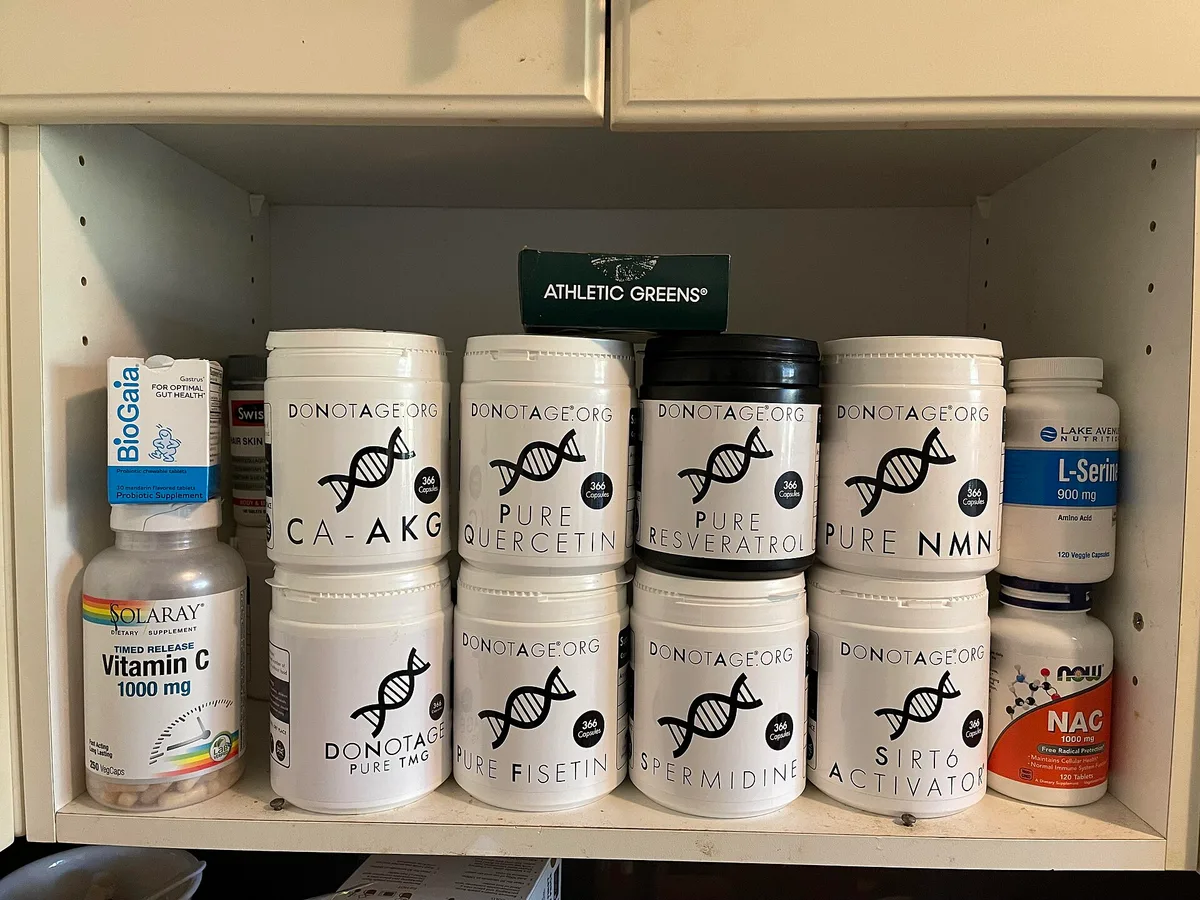
The supplement aisle promises a longer life in a bottle: powders, capsules, and drink mixes marketed as anti-aging tools. The honest answer, according to the doctors who study aging, is that almost none of that promise is backed by strong evidence — and the habits that do move the needle cost far less than a monthly powder subscription.
Dr. Penny Stern, chief of preventive and lifestyle medicine at Northwell Health, puts it plainly. According to The Well, Northwell Health's publication, she warns that the supplement aisle isn't where healthspan begins: "There's no magic bullet. If something sounds too good to be true, it probably is."
What are longevity supplements, exactly?
"Longevity supplements" is a marketing category, not a medical one. It covers a loose shelf of products — vitamin blends, protein powders, collagen, and various compounds promoted online as ways to slow aging. What unites them is the pitch: add years or sharpen your future self by swallowing something daily.
The pitch runs ahead of the science. Supplements are regulated differently from prescription drugs, which means the claims on a label don't have to survive the same testing. That gap is where the hype lives, and it's why Stern is especially wary of unregulated supplements and self-prescribed drugs.
What does the evidence actually say?
The most credible thing in the category is also the least exciting: correcting a real deficiency. "Unless you're correcting a real deficiency (like vitamin D or iron) you're much better off getting your nutrients from food," Stern says in the same interview. That's a narrow, specific use — confirmed by a blood test, not guessed at. Everything beyond it gets murkier fast.
She also notes a pattern that should give any shopper pause: people take supplements without changing any of their behaviors, "and then they wonder why nothing improves." A capsule added to an unchanged routine is not a regimen.
The rest of what longevity actually depends on, in Stern's framing, is unglamorous and largely free: physical activity, restorative sleep, a plant-predominant diet, social connections, stress management, and avoiding tobacco and excess alcohol. She calls these the pillars of a whole-person lifestyle medicine approach. For related coverage, see The Longevity Diet Explained: What Science Actually Says.
Why the pillars beat the pills
Here's the practical math. The pillars compound. Movement supports sleep, sleep supports mood, and social connection is protective in its own right — Stern calls isolation a serious health risk. Each pillar reinforces the others, and none requires a purchase.
A supplement, by contrast, is a single input with no evidence base behind most of its promises. If you want to spend effort on your future health, the highest-return places are the ones Stern names: consistent moderate activity like walking, a whole-foods diet that doesn't require perfection, and good stress management. "You want habits that support you for decades, not something that burns you out after three weeks," she says.
Our analysis: treat the supplement question as a price-versus-benefit problem, the same way you'd evaluate any wardrobe purchase. A pill with thin evidence at a recurring monthly cost is a poor buy next to free inputs with strong evidence. The comparison piece on what a good white shirt actually costs makes a similar point about paying for construction over marketing — the logic transfers. This connects to our earlier piece, What a Good White Shirt Actually Costs — and What You're Paying For.
Where food and testing fit in
If diet is the goal, food first. Stern's advice is to get nutrients from meals, and the evidence around plant-predominant eating patterns is the closest thing the longevity field has to common ground. Our guides on the Mediterranean diet and the longevity diet cover what that looks like in practice, and protein needs as you age deserve their own attention — muscle matters more, not less, in later decades.
Testing has a role too, but a targeted one. A basic annual blood panel is how you find out whether a deficiency actually exists, which is precisely the situation where Stern says a supplement makes sense. Guessing at deficiencies and supplementing anyway is the pattern she warns against.
What about extreme routines?
Longevity content online often pairs supplements with extreme behavior: prolonged fasts, ice baths at sunrise, punishing protocols. Stern is direct that extremes rarely help. "I don't believe in extremes. They're hard to maintain. And for some people, they're outright dangerous," she says. Sustainability matters more than intensity.
She also pushes back on the genetic fatalism that often sells these products — the idea that since your parents lived long, you will too, or that only drastic intervention can change your odds. Some people do win what she calls the genetic lottery, she says, but most of us need to rely on what we can control: diet, activity, stress, and connection.
What this means for your money and your routine
Start with the checklist Stern offers, which costs little or nothing:
- Sleep seven to eight hours a night — "Sleep is like time; once it's lost, it's lost forever."
- Move consistently. "Walking is one of the best forms of exercise. It's free, accessible, and effective."
- Eat mostly real, plant-based food.
- Build and maintain relationships — connection is protective.
- Keep your brain stimulated with small daily challenges.
Then, if a supplement still interests you, apply three filters. First, is it correcting a deficiency a test has confirmed? Second, is the claim specific and modest, or a sweeping promise to reverse aging? Third, would the money do more good spent on food, a pair of walking shoes, or anything else in the pillars? If a product fails those filters, the evidence says walk past it.
One hopeful note from Stern's work: it's never too late to start. She describes patients in their 60s, 70s, and even 80s making changes that dramatically improve their quality of life. "The body wants to heal. You just need to give it the chance." Longevity, in her words, is a practice, not a product — something you build by showing up for your health every day.