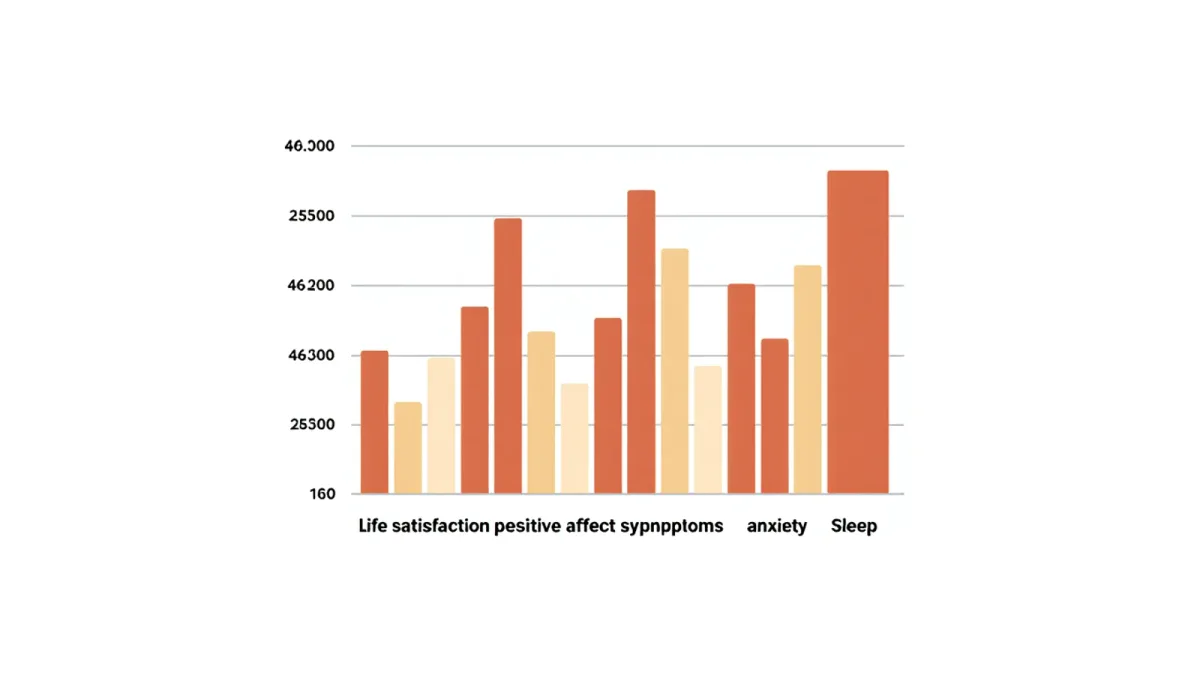
The five-minute journal works when you write three specific things: one or two things you are grateful for, one priority for the day, and one short reflection at night. In a 2003 study published in the Journal of Personality and Social Psychology, participants who wrote weekly gratitude lists reported higher well-being than those who listed hassles, and the effect showed up within weeks. Five minutes is genuinely enough — the trick is knowing exactly what goes on the page.
Journaling is a low-risk habit, but if low mood persists for weeks, talk to a qualified health professional.
What is a five-minute journal, exactly?
It is a short structured journaling routine split into a morning entry and an evening entry, each taking two to three minutes. The idea comes from positive psychology research on gratitude and expressive writing, which researchers at UC Davis and the University of Texas at Austin studied through the 1980s and 2000s. Unlike a diary, there is no pressure to fill pages — you answer fixed prompts and stop.
The structure matters more than the notebook. A five-minute journal is a set of questions you answer consistently, whether that is in a $30 guided book or the notes app on your phone.
What should I write in the morning?
Write three lines before you check your phone: one thing you are grateful for and why, one thing that would make today good, and one affirmation or priority phrased in your own words. The "and why" is the part most people skip, and it is the part that does the work — the 2003 UC Davis study by Emmons and McCullough found participants who explained their listed blessings gained more in well-being measures than those who listed mechanically.
Keep each line to a sentence. If you write "grateful for my sister" every morning for two weeks, push deeper: "grateful my sister called during a rough Tuesday." Specificity keeps the habit from going numb.
What should I write at night?
Write two things: three moments from the day that went well, and one line about what you would do differently tomorrow. The "three good things" format was tested in a 2005 study by Seligman and colleagues published in American Psychologist — participants who wrote down three good things each night for one week reported increased happiness and decreased depressive symptoms at follow-up checks lasting up to six months, per the study's self-reported measures.
The second line is optional but useful. It turns the journal from a highlight reel into a working document. One sentence, no self-criticism allowed — write it the way you would advise a friend.
Copy this five-minute journal template
Steal this verbatim or adjust the wording. The whole thing fits on an index card.
Morning (2-3 minutes)
- I am grateful for ___ because ___.
- One thing that would make today good: ___.
- Today's single priority: ___.
Evening (2-3 minutes)
- Three good things from today: ___, ___, ___.
- Tomorrow I will ___ (one small adjustment, phrased kindly).
That is five prompts total. If five feels heavy on a bad day, answer only the gratitude line. Consistency beats completeness.
How long until it feels worth it?
Most people notice a shift in two to four weeks of near-daily practice. The 2005 Seligman trial used a one-week writing exercise and still measured benefits months later, but participants were instructed to write every night for that week — daily for a stretch matters more than sporadic entries over months. If you miss a day, skip the guilt and just write the next morning.
Set an anchor: attach the morning entry to your coffee and the evening entry to getting into bed. Habits stick to existing routines far better than to intentions.
Paper, app, or guided journal — does it matter?
It matters less than you think, but the friction of opening an app full of notifications is real. Paper or a distraction-free notes app tends to win for the evening entry, when a phone in hand can turn two minutes into forty. A guided journal is worth it only if the blank page genuinely blocks you — otherwise a plain notebook and the template above do the same job for free.
Common mistakes that kill the habit
- Repeating the same gratitude. If you have written "my partner" four days running, get specific about one moment.
- Journaling as rumination. The evening entry is for good things and one adjustment — not a ledger of everything that went wrong.
- Doing it at your desk after work. Tie it to an existing anchor, or it competes with everything else on the to-do list.
- Skipping days and quitting. One missed day is a day off, not a failure. The National Institutes of Health notes that small, repeated behaviors are the foundation of lasting habit change.
Frequently asked questions
What time of day should I do the five-minute journal?
Morning and evening work best because each entry has a natural anchor: coffee for the morning, lights-out for the evening. If you only have one slot, the evening "three good things" entry has the strongest research behind it. Pick the slot you can protect daily and keep entries to a sentence each.
Is the five-minute journal actually backed by science?
Parts of it are. Gratitude listing (Emmons and McCullough, 2003) and the "three good things" exercise (Seligman et al., 2005) both showed measurable well-being benefits in peer-reviewed trials. The commercial guided-journal format itself has not been independently tested, so the honest answer is that the ingredients are studied, and the package is common sense.
What if I have nothing to be grateful for?
Go smaller. Warm socks, a text from a friend, the first sip of coffee — specificity beats scale, and research on gratitude listing suggests the exercise works by training attention toward positive events, not by demanding positivity. On genuinely hard days, one plain line counts.