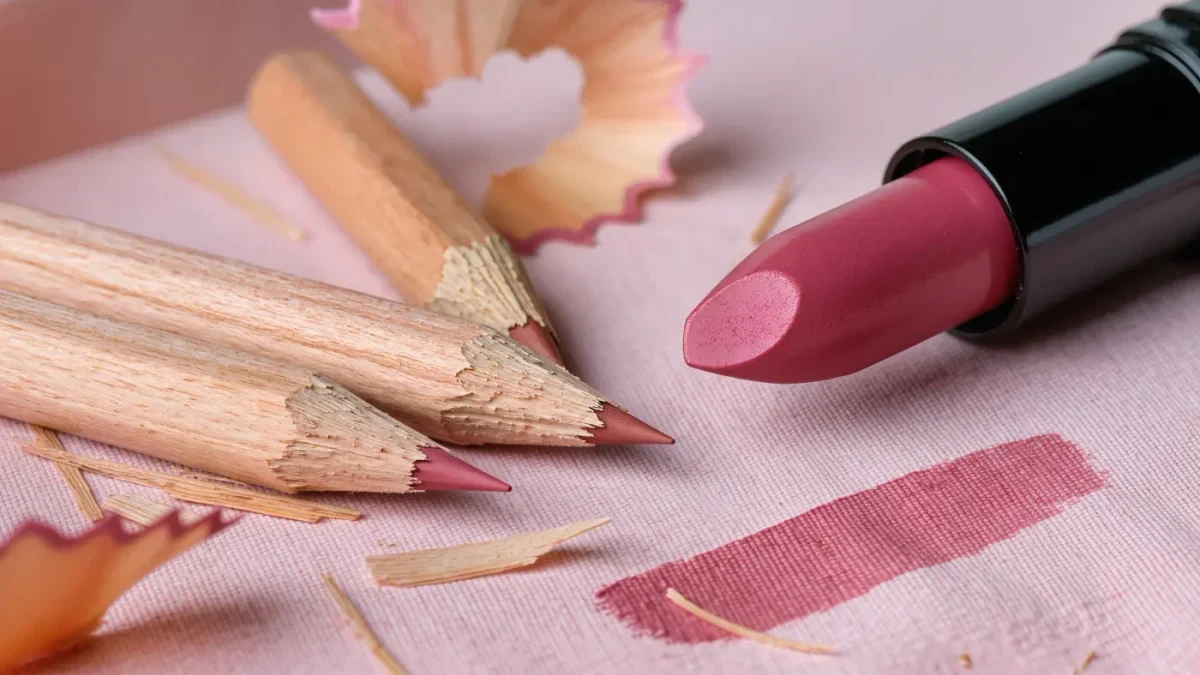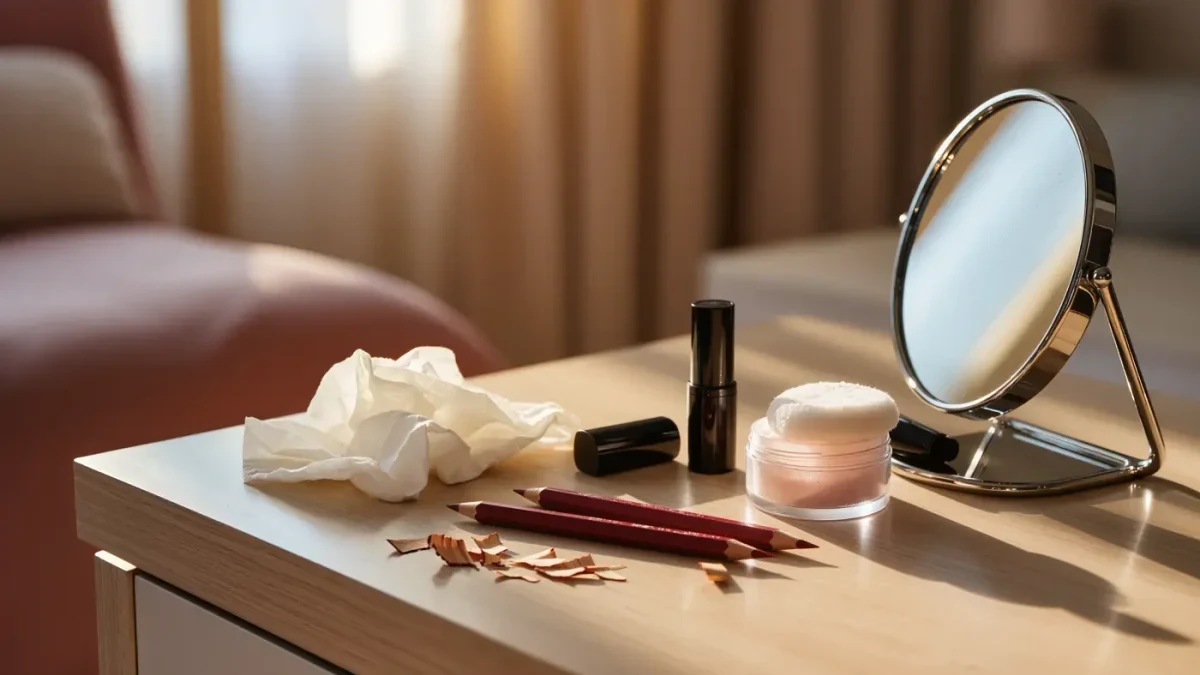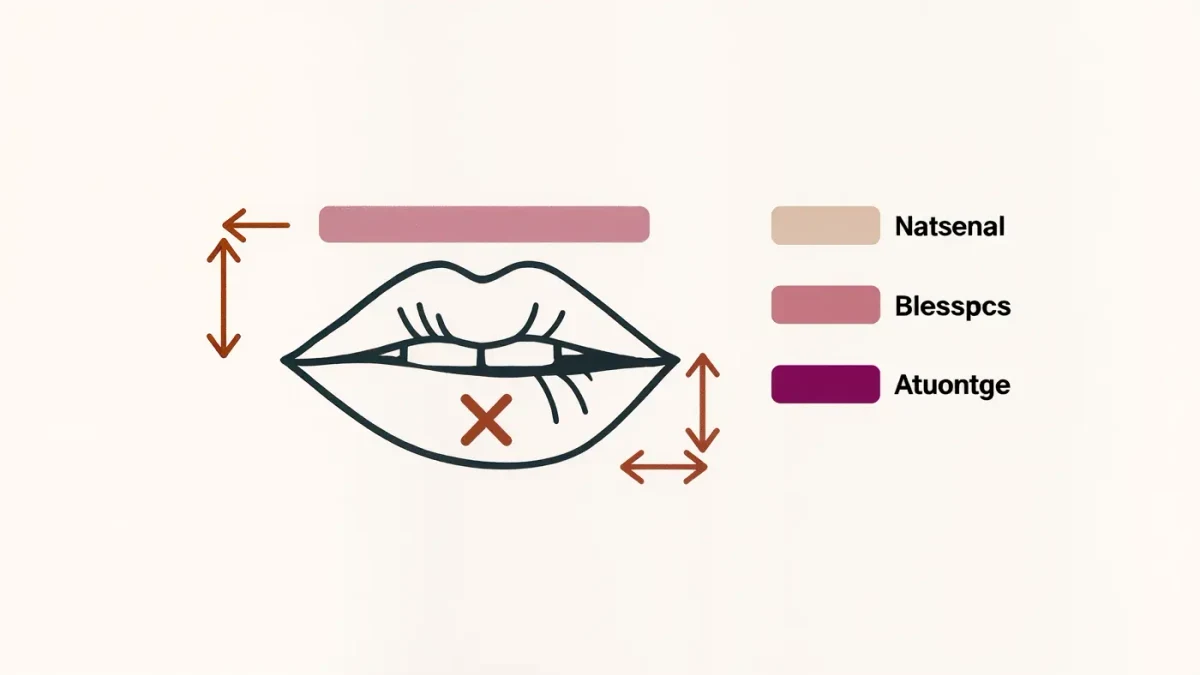
Good lip liner does three things at once: it follows the true lip line (or strays from it by no more than about one millimeter), it gives lipstick a boundary that stops feathering, and a full-pencil base dramatically extends wear — makeup artists have long used the all-over-pencil trick, and per brand documentation from major long-wear pencil lines, a waxy pencil base is what turns a two-hour lipstick into a six-hour one. The technique takes about ninety seconds. What separates polished from harsh is where the pencil goes, not how sharp it is.
VOLEWO publishes information, not beauty or medical advice. The guidance below reflects standard makeup artistry practice and product documentation as of 2026. And one ground rule before the pencil touches your face: your natural lip shape is not a problem to be fixed. Liner is a styling tool, like a hem or a belt — it refines an outline, it does not correct a flaw.
How do you actually line lips so they look natural?
Work from the corners inward, with small connected strokes rather than one long drag. Start at the Cupid's bow: place the pencil on the two peaks and draw a small X or two short strokes to mark them, then connect the X down to the center of the upper lip line. From the corners of the mouth, draw short strokes toward the marks you made — working inward from corners gives you far more control than starting in the middle. For the lower lip, rest the pencil at the center of the lower lip line and glide outward to both corners. Keep your mouth relaxed and slightly open, not pursed, so the line lands on lips in their natural resting position.
The edge you create should be a soft suggestion, not a stencil. After lining, blur the inner half of the line toward the lips with your fingertip or a cotton bud so there is no visible step between liner and skin. A crisp outer edge with a blurred inner edge is the single biggest difference between professional-looking liner and a visible drawn-on ring.
How much overlining is honest?
One millimeter, maximum, and only on specific zones. Extending the Cupid's bow peaks upward slightly makes lips read fuller from the front without changing the profile — this is the technique behind most subtly fuller-looking lip makeup you admire. Extending the center of the lower lip line downward by the same hair's width works for a rounder shape. What breaks the illusion: overlining the corners of the mouth (it looks like smudged lipstick and can visually drag the mouth down) and overlining anywhere by two or more millimeters, where the pencil sits on skin that has no lip texture and reads as drawn from across the room. Contrast matters too — a nude liner one shade from your lip tone can overline invisibly; a deep berry cannot. The more contrast between pencil and skin, the less overline you can get away with.
What shades of liner should you own?
Three cover nearly everything: a your-lips-but-better nude that matches or sits a half-shade deeper than your natural lip color, a true clear or universal pencil, and one deep shade matched to the darkest lipstick you actually wear. The classic matching rule from makeup artistry: liner should match your lipstick shade or run slightly darker — never lighter, because a pale line under a dark lipstick creates a halo as the lipstick wears away first. The nude is the workhorse: worn alone under balm, it defines without announcing itself, and it is the pencil that makes overlining invisible since it sits within your own lip-tone family.
How do you make lip liner last all day?
Build it in layers, then set the layers. The full method:
- Exfoliate and balm lips the night before, not five minutes before — per most long-wear lipstick brand documentation, dry flakes are what make liner and lipstick wear unevenly. Blot balm off before pencil.
- Line as above, then fill the entire lip with the pencil. This is the longevity trick: pencil is waxier and drier than lipstick, and lipstick layered on pencil anchors to it.
- Blot with a tissue, dust a whisper of translucent powder through a single-ply tissue, then apply a second thin layer of liner or lipstick.
- For the longest wear, skip gloss on the center of the lips — per brand wear-test documentation across long-wear lines, gloss is what breaks down pencil bases fastest. A matte liquid on top of a pencil base is the six-to-eight-hour combination.
Does liner stop lipstick from feathering?
Yes, when the line is unbroken — a lipstick that bleeds is traveling along fine lines around the mouth, and the waxy pencil physically blocks that path. If feathering is your main concern, two upgrades help more than more pencil: a clear lip liner, which works under every lipstick you own and carries no shade-matching burden, and a tiny bit of concealer or foundation penciled just outside the lip line to create a matte barrier zone. Mature lips that have lost definition benefit most from this barrier approach — the liner follows the lip where it is, and the concealer cleans the boundary where pigment used to wander.
FAQ
Can I wear lip liner without lipstick? Absolutely, and it is the most wearable version of the trend. Line with a pencil close to your natural lip tone, fill the whole lip, blur the edges with a finger, and top with balm or a drop of clear gloss. You get defined shape and soft color that lasts most of a morning, with none of the maintenance of full lipstick.
Should lip liner be darker or lighter than lipstick? The same shade or slightly darker — never lighter. Lipstick wears from the center outward, and a lighter liner underneath surfaces as a pale ring as the day goes on. A slightly darker liner instead deepens the edge as the center fades, which reads as intentional ombré rather than neglect.
How do I line thin lips? With restraint that flatters them. Follow the true line with a nude pencil, emphasize the Cupid's bow with that honest one-millimeter lift, and keep the strongest color at the center of the mouth — a darker center on a defined edge creates the illusion of dimension and fullness. Heavy overlining on thin lips does the opposite of what it promises: it reads as drawn-on from any distance.