Fashion news peaks twice a year because the industry runs on two main show seasons: one for spring collections and one for fall collections. The spring shows land first, then the fall shows follow, and each round of them sets what designers, retailers and style coverage talk about for months. Once you know the rhythm, the news cycle stops feeling random and starts making sense.
The rhythm matters to you even if you never watch a single show. What walks the runway in a given season is what arrives in stores roughly half a year later, and it is also what shapes the high street versions you will actually buy. A fashion-news cycle built around the tents is, in practice, a preview of your closet.
The scale of the season is easy to see in one place. Vogue catalogs every collection as it lands, from Giorgio Armani and Bottega Veneta down to small independent houses, and the sheer number of spring 2027 ready-to-wear shows listed there — dozens of names, page after page — explains why coverage surges the way it does. When that many collections drop in a few short weeks, the news has no choice but to peak.
Why do the shows happen twice a year?
The two-season system exists because clothes are designed and sold on a lead time. A collection shown now is being sold to stores now, and it needs those months to be produced, shipped and merchandised before customers can buy it. Two seasons a year is the compromise the industry landed on: often enough to keep product fresh, rarely enough that the work stays possible.
Each season has a name that can confuse newcomers. The "spring" collection is shown first and the "fall" collection follows, but both are shown well before their season arrives. So a spring show happens when it is still cool outside, and a fall show happens when it is warm. The gap between the show and the season is the production calendar, not a mistake.
Within each season, the shows also move through a rough order. Womenswear collections get the main spotlight, menswear has its own slot, and couture sits apart from both because those pieces are made to order rather than sold off a rack. The order is stable, which is why editors and buyers can plan their year around it.
What actually happens during a show season?
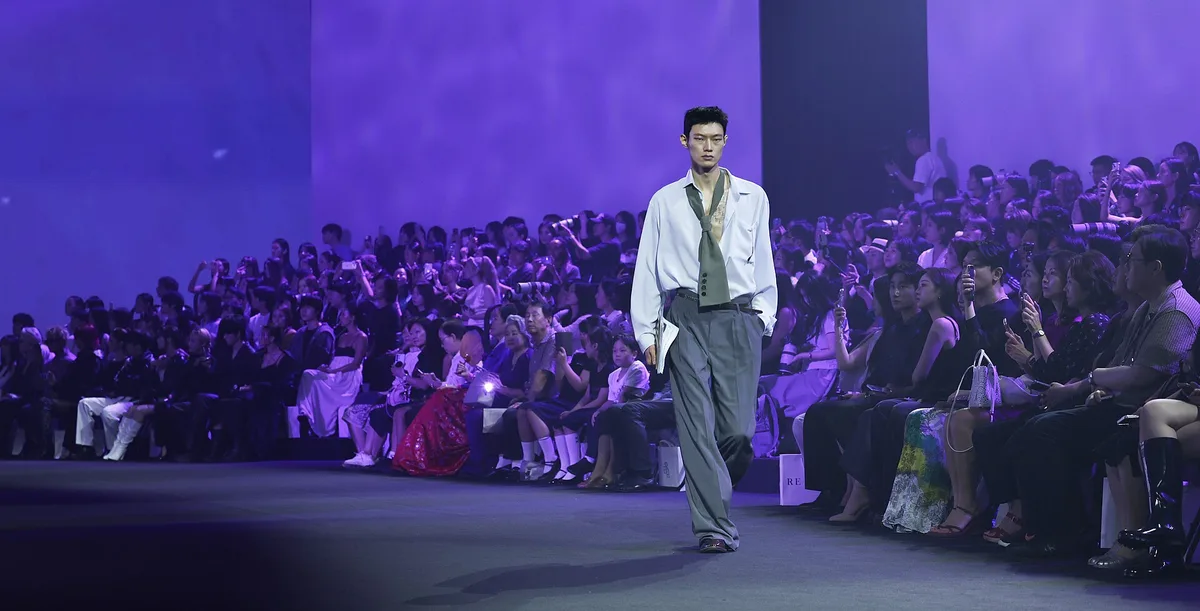
A show season is a compressed burst of activity. Designers present their new collections in person — on runways, in showrooms, sometimes in lookbook form — and the people who matter to the business are in the room: retail buyers placing orders, editors deciding what to feature, stylists pulling pieces for future shoots.
Coverage works in layers. On the day of a show, the news is the collection itself: the cut, the fabric, the color, the styling. In the days after, the analysis arrives — which house nailed it, which designer debut landed, which ideas repeated across cities. Then the season settles into a longer echo, as the strongest pieces resurface in campaigns, editorials and eventually stores.
For a reader, the useful layer is the second and third one. A single look matters less than a pattern. If a particular silhouette shows up in collection after collection, that is the thing likely to reach you at every price point two seasons from now.
How does the coverage cycle follow the calendar?
The show calendar acts as the spine of the whole fashion-news year, and other stories orbit it. Financial results, executive changes and retail news tend to be timed around the seasons, partly because companies prefer to control their own headlines before or after the spotlight hits.
You can see the orbit clearly in recent coverage. Creative-director appointments — like Olivier Rousteing taking over Rabanne after 14 years at Balmain — land as news in their own right, but they matter most in the run-up to a show season, when the question becomes what the new designer will present. The same is true of house leadership changes such as Givenchy's new CEO: the appointment is the story today, the collection is the verdict later.
Money stories follow the same pull. Quarterly results from groups like LVMH — the second quarter, where America carried the group, is one recent example — tell you which houses have the budget and the appetite to make noise at the next round of shows. Forecasts, like Bain's view that luxury recovers in 2026 on American shoppers, shape how much risk designers and retailers are willing to take with a collection.
Even retail stories drift with the calendar. A flagship opening like Fred Perry's return to Soho or a shake-up like Saks Global closing stores reads differently depending on where it sits in the season. Store news near a show season is positioning; store news between seasons is housekeeping. Readers following this should also see Saks Global Starts Closing Stores — and the Luxury Dept. Store Map Is Being Redrawn.
What this means for what you buy
Our analysis is simple: the show season is a shopping forecast, and the lag is your friend. When a season's coverage peaks, you are looking at clothes that will not be purchasable for months. That gap gives you time to decide which ideas are worth adopting and which will pass.
The practical move is to treat the peak as a filter, not a to-do list. Watch for the ideas that repeat across many houses rather than the single dramatic look that dominates a headline. A repeated proportion — a longer hem, a softer shoulder, a wider trouser — is the signal that a shape will be easy to find later, at every price level, once it filters down.
It also pays to know what will not change. The pieces that carry a wardrobe through a season of shows are the same ones that carry it through a year: good fabric, honest construction, a cut that suits your life. That is the logic behind pieces like the ones in How to Spot a Cashmere Sweater Worth the Price — trend churn on the runway makes the slow, well-made layer underneath more valuable, not less.
Price mechanics move on their own clock, but they interact with the seasons. Duty-free and tariff changes, like the end of the $800 duty-free limit, change what imported pieces cost when they finally arrive. A collection you fell for during the shows may reach stores with a different price than the runway suggested — one more reason the lag between show and shelf deserves your attention.
How to follow a show season without drowning
You do not need to watch everything, and trying to is the fastest way to burn out. A calmer approach:
- Pick one or two houses you genuinely care about and follow their shows closely.
- Skim the season summaries from a major aggregator rather than every individual review.
- Note the repeated ideas — silhouettes, colors, fabrics — in a short list.
- Wait. Revisit that list when the season actually arrives in stores, and buy only what still holds up.
The two-peak calendar is not going anywhere. It is the machinery the whole industry runs on, from the biggest house to the smallest independent listed in the show archives. Once you read the calendar instead of the noise, fashion news becomes what it should be: useful information about what you will wear next.