A functional fragrance wardrobe starts with three bottles, not thirteen: something fresh for daytime and work, something warm for evenings and cold months, and one floral or green for spring days and dates. Build that trio in the 50ml size from mid-tier brands and the whole shelf lands around $120–250 as of mid-2026, with each bottle lasting roughly a year of regular wear.
What are the main fragrance families?
Fragrances sort into a few broad families, and knowing them turns a confusing wall of bottles into a legible map. Citrus and fresh (bergamot, neroli, aquatic notes): bright, inoffensive, office-safe. Floral (rose, jasmine, iris, tuberose): the largest family, spanning powdery and clean to heady. Woody (sandalwood, cedar, vetiver): dry and grounded, wears beautifully on everyone. Oriental or amber (vanilla, resin, spice): warm and cozy, best for evening and winter. Fougère and aromatic (lavender, oakmoss, geranium): the classic barbershop register. Chypre and green (oakmoss, galbanum, fig): mossy, sharp, a little formal.
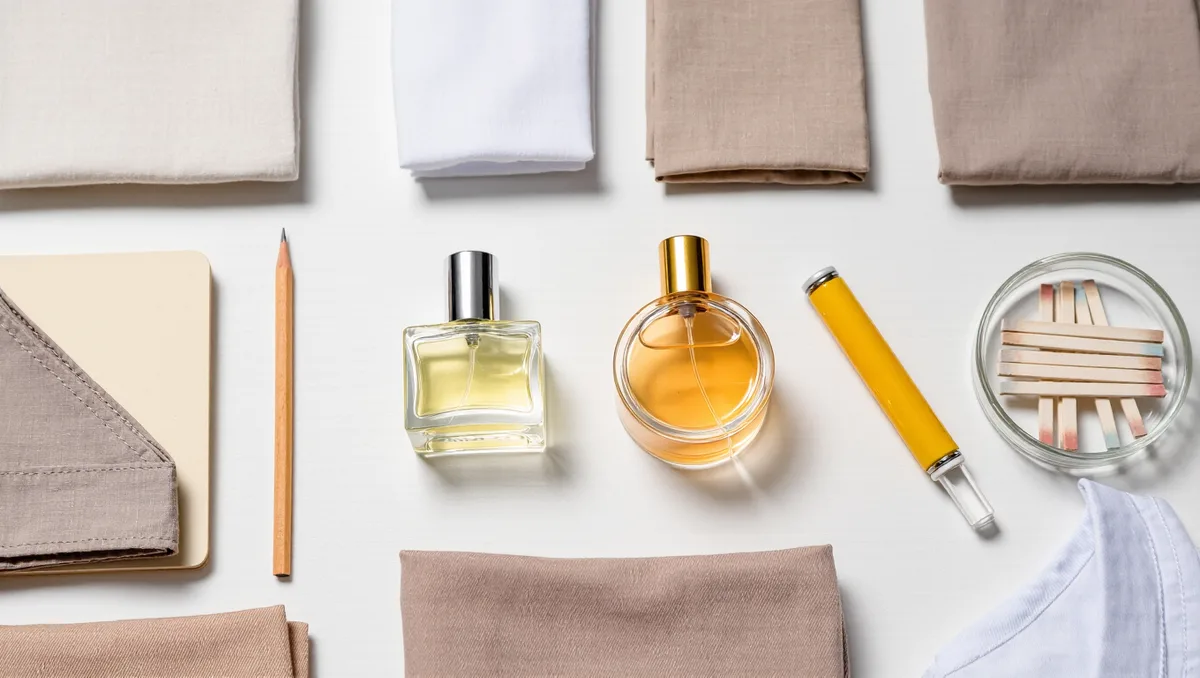
Two vocabulary words do the rest of the work. Notes listed as top are what you smell in the first fifteen minutes; heart notes bloom over the first hour; base notes are what lingers. This is why you never judge a fragrance on the paper strip alone — it's all top notes there. Skin changes everything: the same eau de parfum can read sweeter, sharper, or nearly invisible depending on who's wearing it, which is why every serious guide says test on skin, and wait the full hour before deciding.
Which fragrances for which occasions?
Map your trio to situations rather than seasons alone. The fresh one covers work, gym-adjacent daytime, hot weather, and anywhere you'll be in close quarters — think citrus, clean musks, light florals; low projection is a feature here, not a flaw. The warm one (amber, vanilla, woods, spices) covers dinners, evening events, and the whole November-through-February stretch. The floral or green one is the personality pick: the scent you reach for when a day feels like it deserves something specific — first dates, openings, a spring Saturday.
If you only buy one bottle first, make it the fresh-to-warm middle ground: an irisy or lightly woody scent reads appropriate almost everywhere. Later additions should fill gaps you actually have — a second warm option once you notice you're rationing the first, a summer-only citrus if your winters are mild and your summers brutal. A wardrobe grows honestly from friction, not from a sale email.
Decants before bottles
The single best budget move in fragrance: buy decants — small 2–10ml samples split from full bottles — before committing. Decanting services and department store sample programs typically charge $5–20 for a 5ml decant as of mid-2026 (prices are subject to change), which works out to roughly forty sprays — two weeks of honest testing. A 5ml decant of a $180 perfume tells you more than any review, and ten decants cost less than one wrong full bottle. Keep a note on each: date, weather, occasion, verdict by end of day.
How much should a starter fragrance wardrobe cost?
Less than the fragrance industry hopes. Entry points that regularly earn respect: designer houses' main lines in 30–50ml sizes (commonly $60–120 as of 2026), reputable niche brands' smaller formats ($80–160), and the discovery-set route — many houses sell a sample set with a voucher for a full bottle, effectively making the samples free if you commit. The used market is real too: fragrance resale communities turn over full bottles at 30–50 percent off, and since perfume in a sealed or well-kept bottle keeps for years, secondhand is rational, not risky.
Where to spend and where to save: concentration matters for longevity — an eau de parfum generally outlasts an eau de toilette of the same scent, so a smaller EdP often beats a bigger EdT at the same price. Above roughly the $150 mark you're paying increasingly for packaging, branding, and rare materials; the jump from a $90 scent to a $300 one is real but subtle, and nobody across the table can smell the receipt.
How do I make fragrance last — on skin and on the shelf?
Application first: scent lasts longest on hydrated skin, so apply after a shower or an unscented lotion, targeting pulse points — chest, neck, one spray on a wrist. Don't rub your wrists together; friction crushes the top notes you just paid for. Two to three sprays of an EdP is plenty for close quarters; four to five for outdoors and evenings. A spray on fabric (test first — silk stains) or in hair ends extends the trail noticeably.
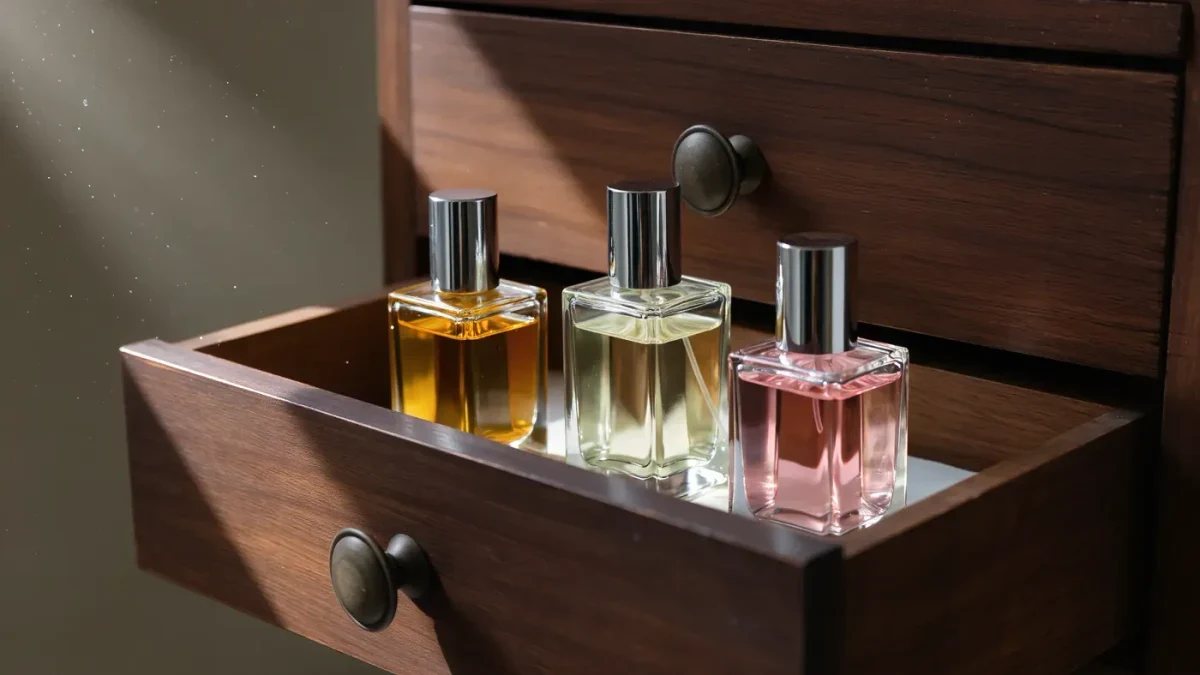
Storage is the unglamorous half of longevity: keep bottles in their boxes, in a drawer or cupboard — steady, cool, dark. A bathroom shelf is the worst address in the house; heat and light oxidize perfume within a year or two. Stored well, an EdP keeps 3–5 years easily, often longer. A wardrobe of three, kept dark and worn often, will age gracefully right up until the pleasing moment you've earned bottle number four.
FAQ
How many fragrances does a beginner need?
Three: fresh for daytime, warm for evenings, one floral or green as your personality pick. That trio covers work, dates, seasons, and weather. Add a fourth only when you notice genuine friction — rationing a favorite or facing a climate your shelf can't handle.
How do I test a fragrance properly?
On skin, never just on paper. Spray once on a wrist or inner elbow, skip other scents for the day, and judge at three points: first minutes, one hour, end of day. Buy a 5ml decant ($5–20 as of mid-2026) for anything you're considering at full price.
What's the difference between eau de toilette and eau de parfum?
Concentration: EdP carries more fragrance oil, so it typically lasts longer and projects more from fewer sprays. A 30–50ml EdP usually outperforms a larger EdT of the same scent at the same price — go smaller and stronger rather than bigger and lighter.