Lifestyle sneakers — the cushioned, comfort-first shoes built for walking rather than sport — now belong in a smart-casual wardrobe, not just a gym bag. The trick is contrast: pair a soft, rounded sneaker with pieces that carry structure, like a tailored trouser, a pressed shirt, or a long wool coat. When one element of the outfit is crisp, the sneaker reads as a deliberate style choice rather than an afterthought.
The idea is less strange than it sounds. According to Wikipedia's overview of lifestyle, a lifestyle reflects a person's attitudes, habits, and way of living — and modern dress has followed, blurring the line between what we wear to move and what we wear to be seen. If your week is built around walking, errands, school runs, and long days on your feet, a comfortable shoe is not a compromise. It is the honest starting point, and the rest of the outfit can rise to meet it.
This guide covers which sneakers to choose, what to wear them with, and the small styling moves that keep the look polished. No body commentary, no rule-lawyering — just combinations that work in real life.
What makes a sneaker a "lifestyle" sneaker?
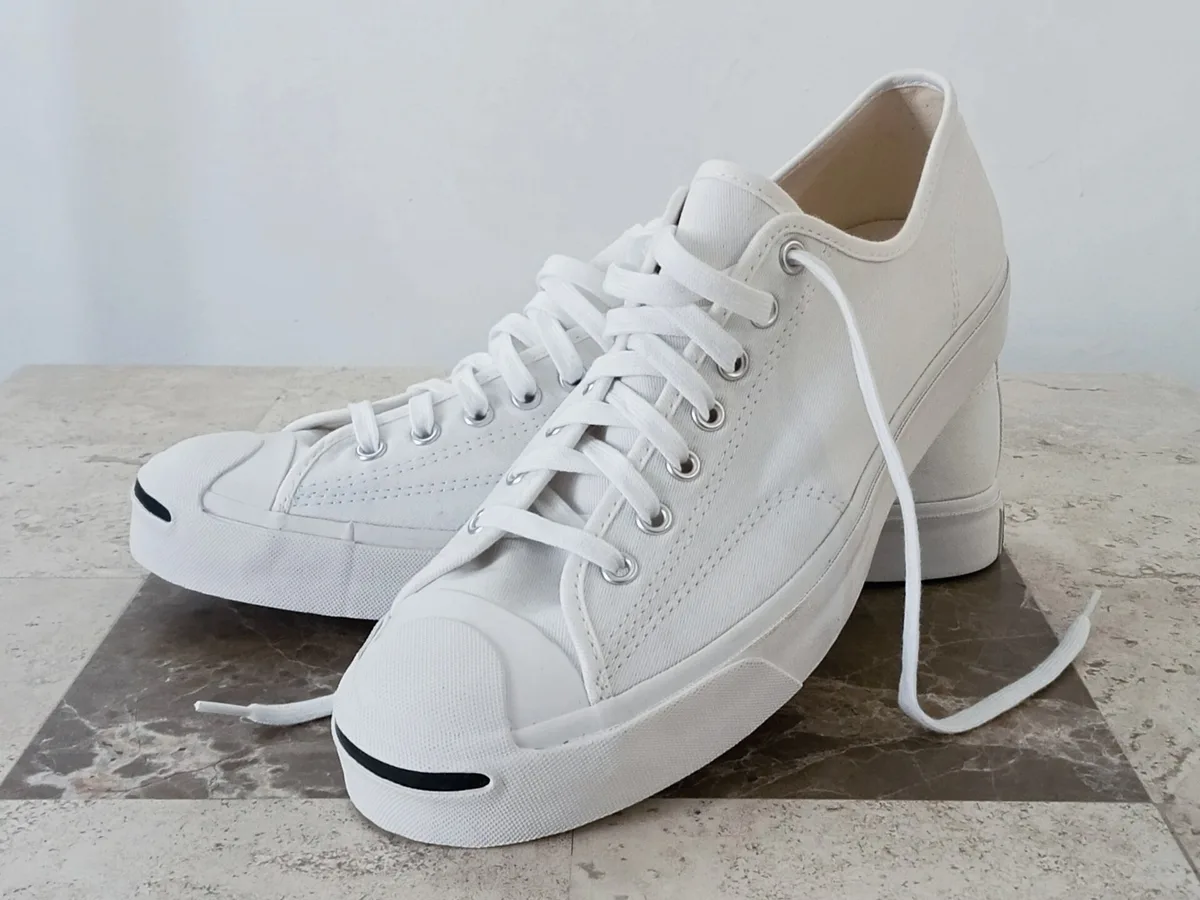
A lifestyle sneaker is a shoe designed for everyday wear and comfort rather than for a specific sport. It usually has a thick cushioned midsole, a soft knit or leather upper, and a rounded toe. Running shoes are built for forward motion; court shoes for lateral movement. Lifestyle sneakers borrow the comfort technology but drop the performance job.
That distinction matters for styling. Performance shoes often carry loud branding, mesh panels, and sculpted soles that fight against tailored clothes. Lifestyle versions tend toward quieter silhouettes — low-profile leather, muted knits, clean white or neutral colorways — that sit easily beside denim, chinos, or wool.
What this means for your shopping: look for a shoe you would be happy to photograph next to a blazer. If the sneaker's own design is calm, the outfit has room to do the talking.
How do you pair sneakers with tailored clothes?
Start with proportion. A chunky sneaker needs volume elsewhere — a wide or straight-leg trouser, a longer coat, a relaxed shirt. A slim, low sneaker works with tapered trousers and shorter hems. When the shoe and the clothes share a visual weight, the outfit looks considered instead of accidental.
Color is the second lever. Neutral sneakers — white, cream, grey, taupe, black — pair with nearly everything. If your outfit already has pattern or strong color, keep the shoe quiet. If the outfit is tonal or plain, a sneaker with one accent color can be the whole point of the look.
A few combinations that reliably work:
- Tailored trousers plus low leather sneakers. Cropped or just-grazing-the-shoe hems keep the line clean. Add a tucked shirt or fine knit on top.
- Straight or wide jeans plus chunky runners. The denim's volume balances the sole. A fitted top keeps the silhouette from going shapeless.
- A midi skirt or dress plus sleek sneakers. Choose a smooth, minimal shoe so the hemline stays the focus. Bare ankles or a short sock both work.
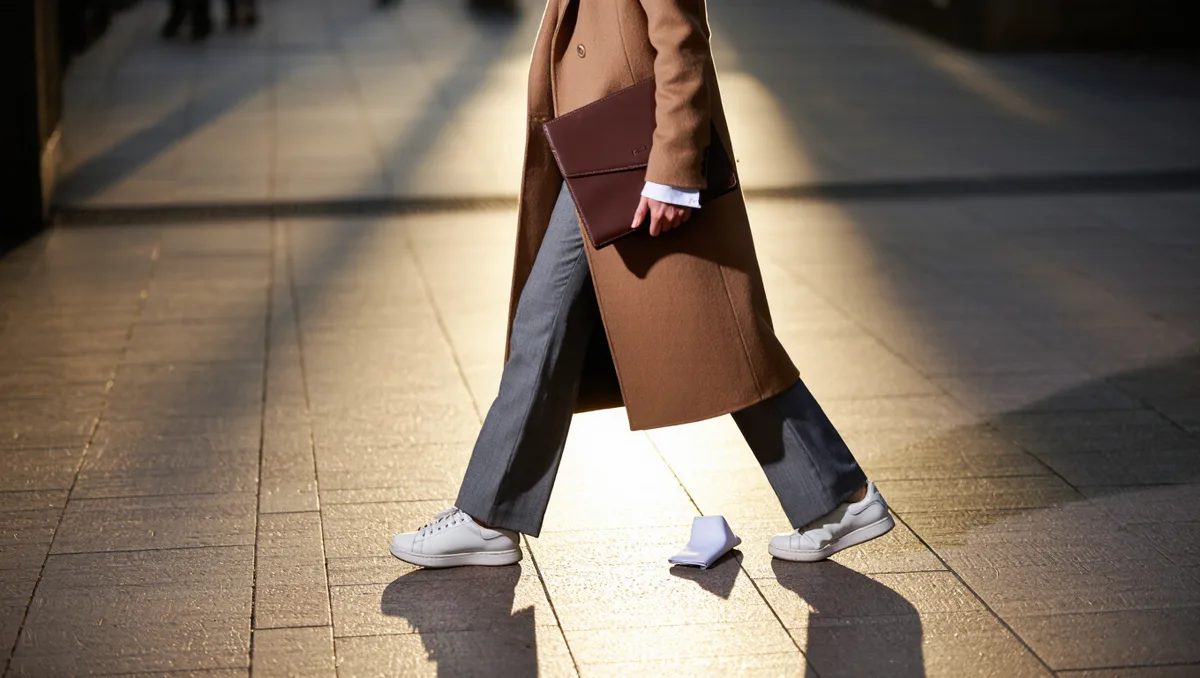
- A long coat over anything. A structured coat does the formalizing. Underneath, the sneaker simply reads as sensible.
One warm verdict: the coat-and-sneaker pairing is the highest-leverage move in this whole article. It costs nothing extra and instantly makes comfort look intentional.
Which fabrics and fits make the outfit look intentional?
Fabric choice does most of the quiet work here. Sneakers are casual by nature, so the surrounding pieces should bring texture and weight: denim with some body, wool flannel trousers, a crisp cotton poplin shirt, a substantial knit. Head-to-toe jersey or thin, drapey fabrics next to a sporty shoe can tip the whole outfit toward loungewear.
Fit details matter more than brand names. Roll or cuff a hem so it meets the shoe deliberately rather than puddling over it. Keep socks in on the plan — a no-show sock for sleek shoes, a ribbed crew sock in a matching tone for chunkier ones. And mind the condition: a scuffed, gray-white sneaker undermines even a great outfit, while a clean, basic pair elevates it.
If you are building the rest of the wardrobe around these shoes, a small capsule approach helps. Our guide to The Five-Piece Capsule That Survives a Real Winter shows how a few structured layers carry many outfits — sneakers included. And if your picks include leather uppers, the upkeep is quick: our Simple Leather Shoe Care Routine (10 Minutes, Twice a Month) covers the whole thing.
When should you skip sneakers and reach for something else?
Honest answer: not often, but sometimes. For very formal settings — a tailored suit at a formal event, most traditional offices with dress codes, upscale restaurants with stated dress expectations — a leather shoe or boot remains the safer read. Sneakers with a suit can look sharp, but it is a styling risk that depends on the suit's cut, the shoe's slimness, and the room you are walking into.
Also reconsider the sneaker when the outfit's formality lives entirely in one piece. A silk blouse over track pants and running shoes asks the blouse to do too much. Spread the polish across two or three pieces and the sneaker stops being the odd one out.
Our analysis: the question is never "are sneakers allowed?" but "does the outfit look like one decision?" If the sneaker is the only casual element, it will read as a mistake. If two or three elements share its ease, it reads as a style.
How do you keep a small sneaker rotation working hard?
You likely need fewer pairs than you think. A practical rotation is one clean neutral pair for smart-casual outfits, one comfortable pair for long walking days, and — if it suits your life — one weather-appropriate option for rain or cold. Everything else is preference, not necessity.
Before adding a pair, run it through the same sort you would apply to the rest of the closet. The logic in The Four-Pile Closet Edit: A Sorting System That Actually Ends applies neatly to shoes: keep what you actually wear, retire what you don't, and notice which gaps are real. And if the goal is a wardrobe that looks expensive without costing much, the styling principles in Buy Less, Style More: How to Build Quiet Luxury on a Budget — neutral palettes, good condition, deliberate proportion — are exactly the ones that make a modest sneaker look considered.
For more everyday practicality, browse the rest of our lifestyle coverage.
Wearing comfort well: the takeaway
Lifestyle sneakers earned their place in a smart-casual wardrobe by doing something dress shoes never promised: letting you walk all day. The evidence for wearing them is not a trend forecast — it is your own calendar. If your days are full of movement, the outfit should be built around that, with structure and fabric doing the polishing up top.
What remains unknown is only the personal part: which silhouette, which color, which hem length suits you. That answer comes from trying combinations in front of your own mirror, not from any rule list. Start with one structured piece, one clean neutral sneaker, and one deliberate hem. That is a complete outfit — and a completely comfortable one.