Balance training after 40 is simply practicing the skill of staying upright — and it matters because balance is a skill, not a fixed trait. It declines with age as the eyes, inner ear, and body's position sensors all get less reliable. The good news: short, regular drills like single-leg stands and heel-to-toe walks can slow that decline and lower your fall risk.
This is not a small thing. According to Wikipedia's overview of balance ability, one in three adults aged 65 and over will fall each year. Falls are the leading cause of injury for people 65 and older, and the consequences — hip fractures, head injuries — are what quietly end independent living. A few minutes of deliberate practice, started well before that age, is one of the highest-return habits a wardrobe-obsessed reader can adopt. You can always buy a better coat. You cannot buy back a steady step.
Why does balance get worse with age?
Staying upright is a team effort. Your inner ear senses head position, your eyes judge the room, and nerves in your muscles and joints report where your body sits in space. Your brain stitches these signals together and makes constant tiny corrections — most of them invisible to you.
As Harvard Health explains in its guidance on balance, physical changes due to aging are the most common reason balance declines. Nerve cells in the inner-ear vestibular system decrease with age, small nerve fibers in the feet become less sensitive, and vision changes make distance and depth harder to judge. Weak or slow muscles compound the problem, because recovering from a stumble is a strength job as much as a sensing job.
There is also a trap built into the decline. Harvard Health describes a cycle of deterioration: feeling unsteady makes people avoid activity, which weakens the very muscles and reflexes that keep them upright. Fear of falling makes some people shuffle and tense up — which, ironically, raises the risk of a fall. Breaking that cycle early is the whole argument for starting balance work in your forties rather than your seventies.
Balance is the ability to distribute your weight so you can stand, move, and recover without falling. Practice it while it is easy and it stays easy longer.
What this means for your daily routine
Here is our analysis of what the evidence supports: balance responds to practice the way strength and cardiovascular fitness do, just more quietly. You do not need a class, equipment, or an app. You need a few minutes a day of standing on less stable footing than two flat feet provide, and you need to keep doing it.
The drills below are simple, and simple is the point. Do them near a counter or a sturdy chair at first. Shoes off is fine — bare feet give your position sensors the best information. If any drill causes dizziness or pain, stop and raise it with your doctor, which Harvard Health recommends for any new balance problem or dizziness anyway.
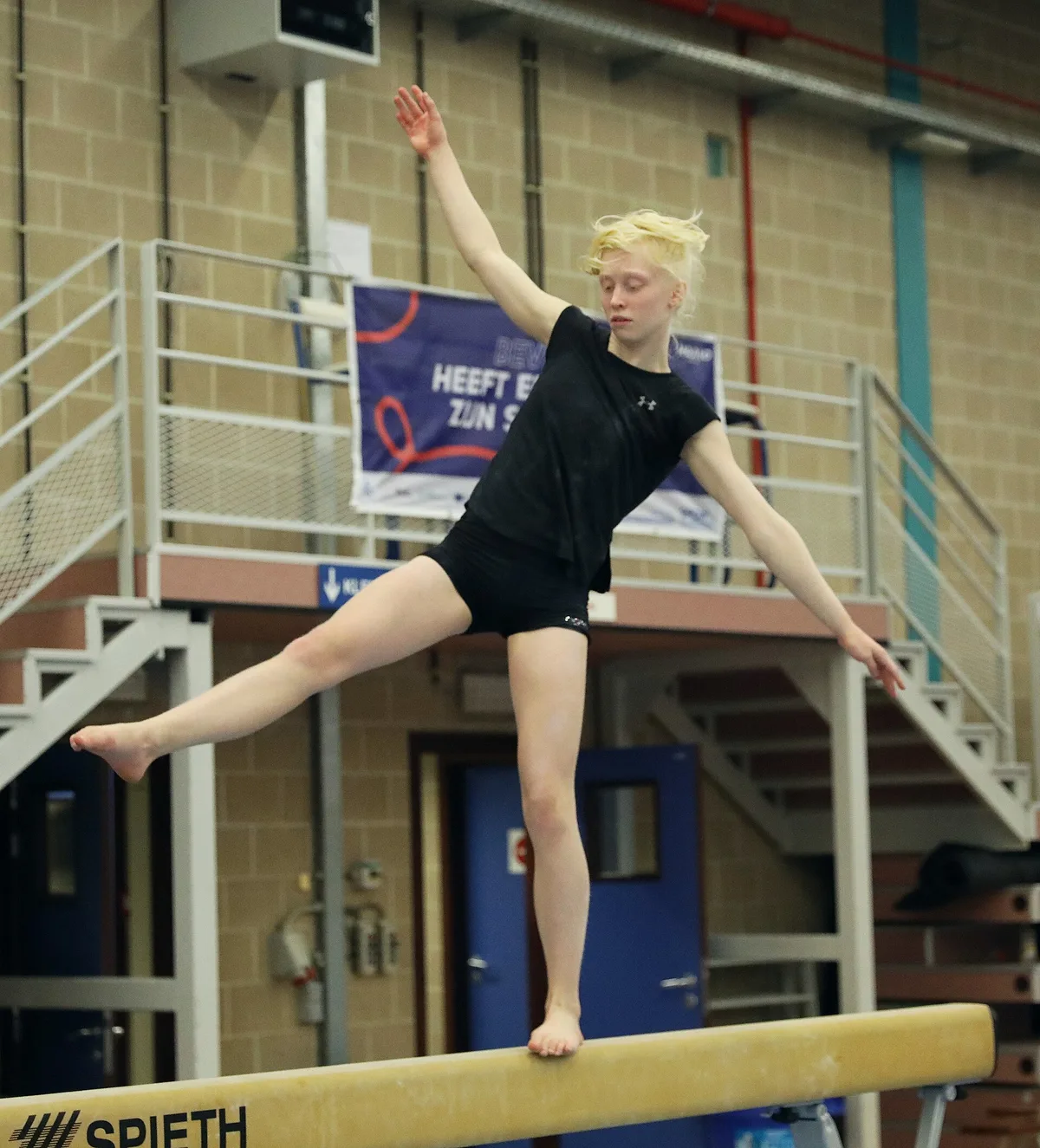
- Single-leg stand. Stand on one foot, hold for as long as is comfortable, then switch. Build up gradually over weeks. Once you are steady, try it while brushing your teeth — habit-stacking beats willpower.
- Heel-to-toe walk. Walk a straight line placing the heel of one foot directly in front of the toes of the other, as if on a tightrope. Ten steps out, turn carefully, ten steps back.
- Stand-up practice. Rise from a chair without using your hands, sit down with control, repeat several times. This trains the leg strength and the balance transition at once.
- Weight shifts. Stand with feet hip-width apart and shift your weight slowly side to side, then front to back, letting one foot take the load fully.
- Eyes-closed hold. Only once the single-leg stand feels easy: try it with eyes open, then briefly with eyes closed near support. Vision is a big part of balance, so removing it makes the inner ear and foot sensors work harder.
Progress by making the task slightly harder over time — longer holds, less hand support, eyes closed. That progression is what keeps the drills working as the years pass.
How much practice do you actually need?
The honest answer is that a few minutes most days is a reasonable, low-cost habit, and consistency matters more than duration. Balance training appears in physiotherapy plans precisely because it is effective and adaptable — Wikipedia's summary of balance training notes it is commonly introduced by physiotherapists for older adults, with progressions such as varying the base of support and gait practice. You do not need clinical doses to maintain a healthy system; you need to give it a reason to stay sharp.
Think of it the way you think about strength work. As we covered in Why Resistance Training Matters More After 40 — and How to Start, muscle responds to regular, gradually increasing challenge. Balance is the same principle with a smaller time bill. The two pair well: stronger legs recover from stumbles better, and steadier balance lets you use that strength. For related coverage, see Why Resistance Training Matters More After 40 — and How to Start.
When is poor balance a doctor problem, not a practice problem?
Sometimes the issue is not deconditioning. Harvard Health notes that medications — including antidepressants, antihistamines, blood pressure drugs, and sedatives — can cause dizziness or dull reflexes, and that taking multiple drugs raises the risk further. Its advice is explicit: if you are worried about falls, ask your doctor to review your medications, and tell your doctor about any fall or near-fall, even if you were not hurt.
Harvard Health also recommends periodic eye exams, since vision problems directly undermine the ability to judge distance and stay on your feet. Any new dizziness, lightheadedness, or the sensation that the room is spinning warrants a call rather than a drill. Practice is for the ordinary age-related slide; a clinician is for everything else.
This is worth pairing with the broader picture of aging well. Balance sits alongside the markers we have written about before — grip strength among them — as small, measurable signals that respond to training. And if you want the wider context of what actually moves the needle on a long healthspan, our longevity section collects the evidence-first pieces in one place. We covered a connected angle in Grip Strength: The Small Health Marker Worth Measuring.
What balance training can and cannot do
What the evidence establishes: balance declines with age across several body systems, falls are common and consequential in later life, and balance training is a recognized, effective tool that physiotherapists prescribe. What remains less certain is exactly how much training produces how much protection for any one person — the research supports the practice, not a guaranteed outcome.
What is not in doubt is the cost-benefit. Five minutes near the kitchen counter, most days, costs nothing and asks nothing of your schedule. Start now, while the drills are easy, and the point of the exercise stays invisible — which is exactly how good insurance should look.