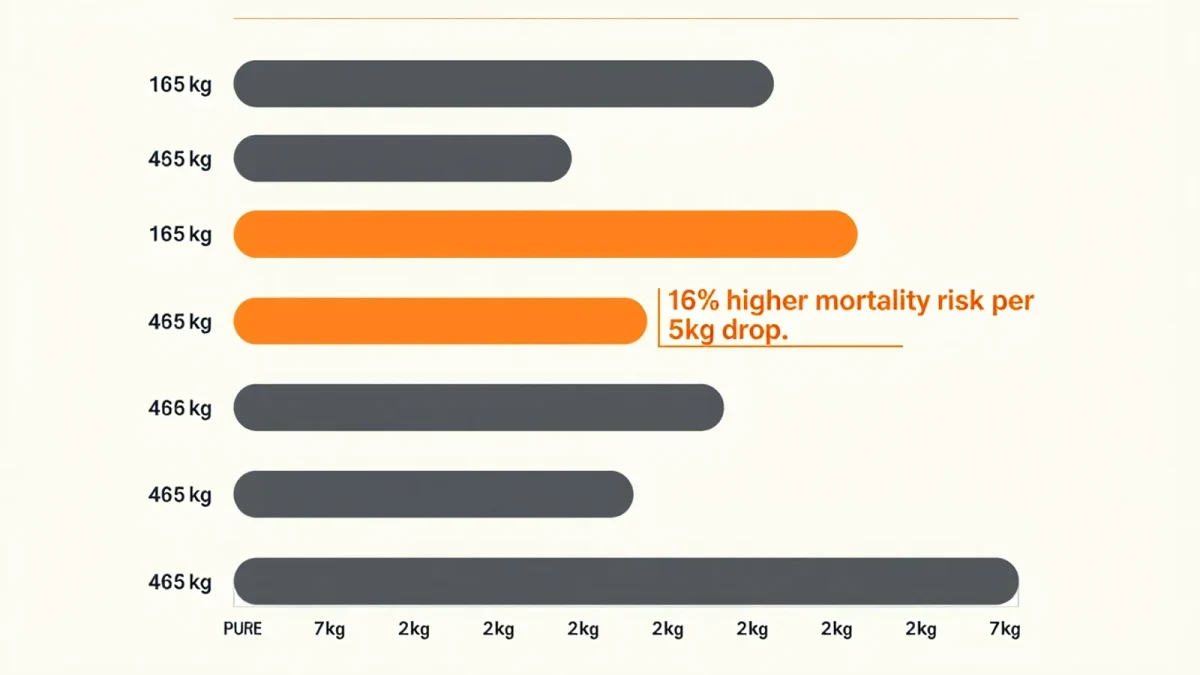
Grip strength is one of the most telling quick measurements in health research: in the PURE study of nearly 140,000 adults across 17 countries, published in The Lancet in 2015, every 5-kilogram drop in grip strength was associated with a 16 percent higher risk of death from any cause during the follow-up period.
A weak grip is not a diagnosis of anything on its own — it is a signal worth discussing with your doctor, especially if it appears suddenly or affects only one hand.
Why do researchers care so much about grip?
Grip strength is cheap, fast, and surprisingly representative. Measured with a hand dynamometer — a device you squeeze as hard as you can — it captures overall muscle function well enough that large studies use it as a proxy for total-body strength, particularly in older adults. The National Institute on Aging includes grip strength among the measures researchers use to assess sarcopenia, the age-related loss of muscle.
The 2015 PURE analysis (Leong et al.) made headlines because grip predicted death from cardiovascular causes and from any cause better than systolic blood pressure did in that dataset, and it remained predictive after adjusting for age, sex, and other factors. Later cohort work has linked weaker grip with slower recovery from hospitalization, higher disability risk, and cognitive decline in older adults. None of this means strengthening your hands directly prevents these outcomes — grip is a marker as much as a mechanism — but a number that tracks with so much deserves attention.
Typical reference points: grip strength in the high 20s to 40s of kilograms is common for healthy adults, with men averaging higher than women and both declining gradually from midlife. Cutoffs used in sarcopenia research (often below about 27 kg for men and 16 kg for women, per the 2019 European consensus definitions) flag weakness worth discussing with a clinician.
How can I test my own grip?
Options range from precise to improvised:
- Dynamometer: some gyms, physiotherapy clinics, and health fairs have one; consumer versions sell online for the price of a dinner out. Squeeze hard for a few seconds, seated with the elbow at 90 degrees, two or three tries per hand, and note the best.
- Practical markers: how easily you open jar lids, carry grocery bags, hang from a pull-up bar, or keep hold of a loaded suitcase. These are crude, but if they have quietly worsened over a couple of years, that trend is real information.
- Dead-hang test: hang from a bar and time it. Anything past 30 seconds is a reasonable baseline for most adults; the number's trend over months matters more than the starting point.
Track whichever measure you choose every three to six months. Single readings vary with effort and hand fatigue; trends do not lie as easily.
How do you train grip strength?
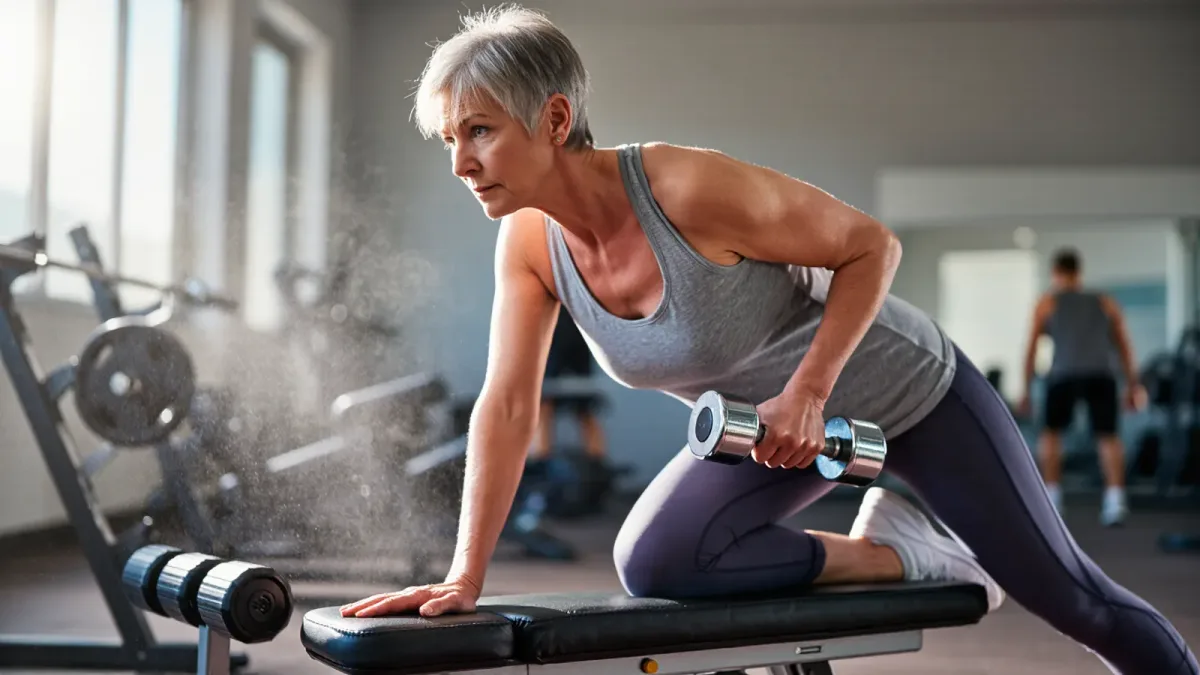
Grip grows best as a byproduct of real lifting, supplemented by a couple of targeted moves. Three sessions of gripping work per week is plenty:
- Carries: farmer carries — walk 30 to 40 steps holding a heavy dumbbell or kettlebell in each hand. Grip is usually the limiting factor, which makes this the single best grip exercise most people can do.
- Dead hangs: hang from a pull-up bar for time, adding seconds weekly. Start with partial hangs if a full hang is out of reach.
- Heavy rows and deadlifts: any pulling done with a bar or dumbbell loads the forearms hard; strapless sets double as grip training.
- Direct work: grippers, plate pinches, and towel-wrapped dumbbell holds add volume without much time. Two or three sets at the end of a session suffice.
Expect measurable progress in four to eight weeks — grip adapts quickly, in both directions. It also fades fast when unused, which is exactly why researchers like it as a marker of an active life rather than of strong hands alone.
Is grip strength really about the hands?
No, and that is the point. Forearm muscles are small; what a dynamometer mostly captures is the whole system behind them — nerve drive, overall muscle mass, and years of physical activity or its absence. That is why grip tracks with outcomes far beyond the hand. If your grip test comes back unimpressive, the fix is a full-body strength program, not endless wrist curls; the grip numbers rise alongside everything else. National health guidance, including the Physical Activity Guidelines for Americans (HHS, 2018), already recommends muscle-strengthening work twice a week for all adults — grip strength is one more reason to take that line seriously.
What does grip mean for daily independence?
The clearest way to think about grip is as an early warning for the activities you want to keep. Research on hospitalized older adults, reviewed by groups studying sarcopenia, has associated low grip strength with slower recovery and higher rates of disability afterward, because opening a heavy door, rising from a low chair, and hauling a suitcase all depend on the same force chain. Clinicians therefore use the measurement to decide when to refer people for strength rehabilitation before a fall or illness forces the issue.
Checking it costs almost nothing: one squeeze on a dynamometer every few months, or an honest dead-hang timer at the playground bar. A stable number is a quiet reassurance; a drifting one is a nudge to start the carries and rows described above now, while the fix is easy.
Frequently asked questions
What grip strength number should I worry about?
Commonly used sarcopenia cutoffs sit below about 27 kg for men and 16 kg for women, per the 2019 European Working Group consensus definitions. Below those levels — or with a rapid, one-sided, or unexplained decline — bring the number to your doctor rather than self-treating.
Can grip strengtheners alone improve my health?
They will strengthen your hands, but the health associations in studies like PURE reflect whole-body muscle function and activity, not finger strength in isolation. Hand grippers are a fine supplement, while carries, rows, and hangs deliver more of what the marker actually measures.