In the PREDIMED trial, a landmark Spanish study of roughly 7,400 people at high cardiovascular risk published in the New England Journal of Medicine in 2013, participants who followed a Mediterranean diet with added olive oil or nuts had about 30 percent fewer major cardiovascular events over roughly five years than those told to follow a low-fat diet.
Changing how you eat is generally safe, but if you have diabetes, kidney disease, or take medications affected by diet, work with your doctor or a registered dietitian on the specifics.
What is the Mediterranean pattern, exactly?
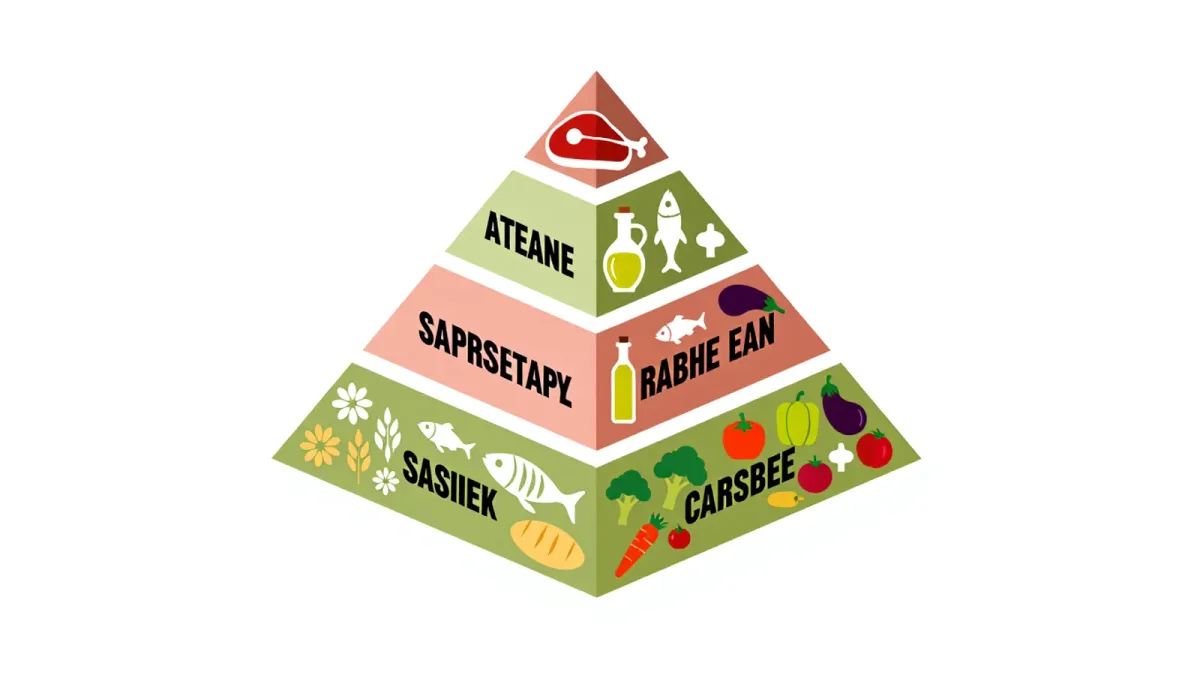
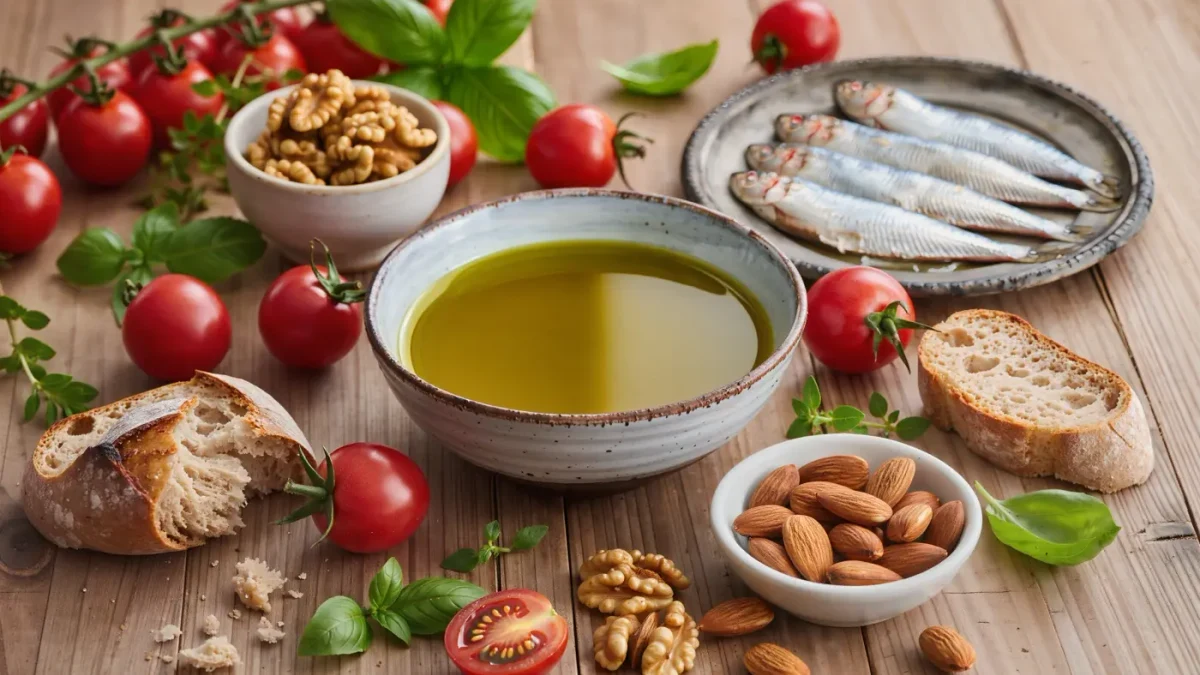
It is a pattern, not a rulebook. The traditional eating style of Crete, southern Italy, and Greece in the mid-twentieth century — the version researchers first studied — centers on vegetables, fruit, legumes, whole grains, nuts, and generous olive oil; includes fish and seafood at least twice weekly; uses poultry, eggs, and dairy in moderate amounts; and treats red meat and sweets as occasional rather than daily foods. Harvard's Nutrition Source describes it as one of the healthiest studied patterns, with strong evidence behind it.
Two details matter more than people expect. First, fat is not minimized — the diet gets 35 to 40 percent of calories from fat, mostly monounsaturated fat from olive oil and nuts. Second, it is a pattern, not a list of superfoods: trials tested the whole combination, not single ingredients. Drizzling olive oil on an otherwise unchanged diet of processed food is not the studied intervention.
How strong is the evidence?
The evidence is unusually deep for nutrition science, but it comes in layers of different strength:
- Randomized trials: PREDIMED (New England Journal of Medicine, 2013; re-analyzed and republished in 2018 after corrections to participant randomization) remains the largest trial, showing roughly a 30 percent relative reduction in stroke and major cardiovascular events — driven mainly by fewer strokes. The Mediterranean-style diet also performed well for cognitive and cardiometabolic outcomes in other trials, though results have been mixed for specific conditions.
- Cohort studies: decades of observational research, much of it summarized by Harvard and other academic groups, link closer adherence to the pattern with lower all-cause mortality, lower rates of type 2 diabetes, and better cognitive aging. These show association, not proof.
- Mechanistic work: extra-virgin olive oil's polyphenols and monounsaturated fat, and omega-3 fats from fish, have plausible anti-inflammatory and lipid effects documented in smaller studies.
The honest summary: the strongest proven claim is cardiovascular — fewer strokes and heart events in higher-risk adults. Claims about dementia, cancer, and "adding years to your life" rest mostly on observational data, which is supportive but softer.
What about weight loss?
Modest at best as a standalone goal — and that is not a flaw. In trials, Mediterranean-style eating produces weight loss similar to other sensible calorie-controlled diets: typically a few kilograms over a year, not a rapid transformation. Where it stands out is staying power. Review studies comparing diets over 12 months or more have found participants stick with Mediterranean-style eating better than with more restrictive plans, and adherence — not speed — is what drives long-term results.
Its heart benefits in PREDIMED also appeared largely independent of weight change, which surprises people. The olive-oil and nut arms improved outcomes without participants losing meaningful weight, suggesting the fats themselves were doing cardiovascular work.
What does a realistic week look like?
You do not need to cook Greek. The pattern translates to any kitchen:
- Daily: vegetables at two meals, fruit for dessert or snacks, whole grains instead of refined ones, olive oil as your main cooking and dressing fat.
- Several times a week: beans or lentils in salads, soups, and stews; a handful of unsalted nuts; fish or seafood twice a week — canned sardines and salmon count and cost little.
- Weekly, not daily: red meat once or twice in modest portions; sweets as an occasional pleasure.
- Drink: water as the default. Wine is part of the traditional pattern but is optional, and major health bodies advise against starting to drink for health reasons.
Cost is a common objection, and it is partly fair — fish and nuts are not the cheapest shelf in the store. But beans, lentils, oats, frozen vegetables, canned tomatoes, and olive oil used sparingly are among the most affordable foods available, and the pattern was historically a diet of modest means, not abundance.
Is it actually better than other healthy diets?
It is the best-evidenced, not necessarily the uniquely best. Large comparative reviews have found Mediterranean-style, DASH, and other plant-forward patterns perform similarly for most outcomes, and DASH has the stronger specific evidence for blood pressure. If you prefer Nordic or vegetarian patterns with olive oil, nuts, fish, and vegetables, you are essentially capturing the same protective ingredients. What most of the successful patterns share is plants at the center, unsaturated fats instead of saturated ones, and little ultra-processed food. Pick the version you can keep up for years — that choice matters more than the label on it.
Frequently asked questions
Do I need to give up bread and pasta?
No. The traditional pattern includes bread, pasta, and other grains daily — mostly whole-grain or firm-cooked versions in moderate portions, alongside vegetables, legumes, and olive oil. Grains are a base of the pattern, not a forbidden food; the difference from many modern diets is portion size and what travels with them.
Is olive oil really that special?
Extra-virgin olive oil is the best-studied single component, and PREDIMED's olive-oil arm contributed to the cardiovascular benefit. But researchers attribute the effect to the whole pattern. Treat olive oil as your default fat — one to four tablespoons a day replaces, rather than adds to, butter and seed oils you would use anyway.