The official recommended dietary allowance for protein is 0.8 grams per kilogram of body weight per day, set by the National Academies — but research groups such as the PROT-AGE Study Group (2013) and the European Society for Clinical Nutrition and Metabolism have suggested adults over 65 may do better on roughly 1.0 to 1.2 grams per kilogram, spread across the day.
Protein targets shift with kidney disease, pregnancy, and several other conditions, so anyone with a chronic diagnosis should set their number with a doctor or registered dietitian rather than from a magazine table.
Why does protein matter more with age?
Two reasons that compound each other. First, your body gets less efficient at using protein: research on anabolic resistance shows that older muscles build less new tissue from the same meal than younger ones do, so the same 15 grams of protein produces a smaller response at 65 than at 25. Second, appetite and intake tend to shrink — many older adults quietly eat less of everything, protein included, which feeds the gradual muscle loss called sarcopenia that the National Institute on Aging identifies as a driver of frailty and falls.
Muscle is not the whole story. Protein also supplies the amino acids used for immune function, skin repair, and enzymes, and inadequate intake shows up in wounds healing slowly and nails and hair turning fragile. The RDA of 0.8 g/kg was set as the minimum to prevent deficiency in average healthy adults — not the amount associated with preserving muscle and function in later decades, which is why position papers have argued for more.
How many grams do you actually need?
Here is the arithmetic, using the commonly cited ranges:
- Official RDA (all adults): 0.8 g per kg of body weight — about 55 g for a 68-kg (150-lb) person. Again, a deficiency-prevention floor.
- Suggested target for healthy adults over ~65: 1.0 to 1.2 g/kg per day, per the PROT-AGE Study Group (2013) — roughly 68 to 82 g for that same 68-kg person.
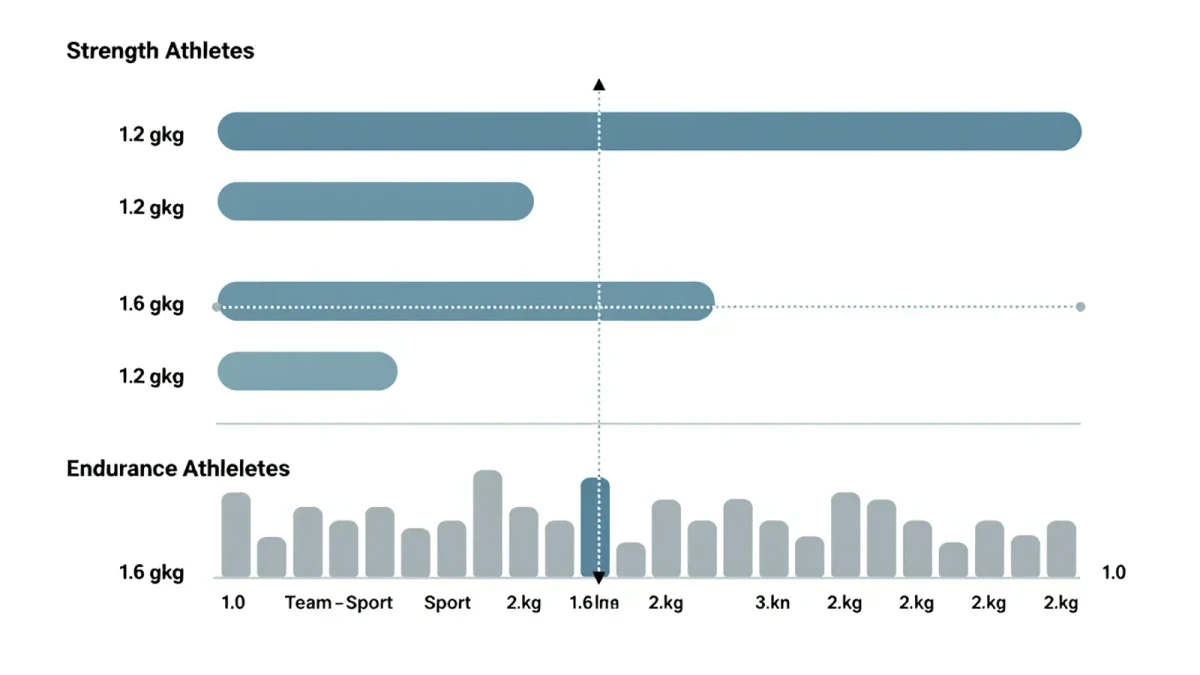
- Adults doing serious strength training: review literature on sports nutrition (e.g., the International Society of Sports Nutrition's position stands) has suggested 1.6 to 2.2 g/kg for building muscle, regardless of age.
Two cautions on the math. Use your healthy target weight, not a current weight that includes considerable excess — and treat all of these as research-based suggestions rather than prescriptions. Higher intakes beyond roughly 2 g/kg have no demonstrated added benefit in most studies, and people with chronic kidney disease are often advised to keep protein moderate, which is one more reason the doctor conversation matters if you have one.
Does timing matter as much as the total?
It matters, but less than the total. The anabolic-resistance research suggests older adults respond best to around 25 to 30 grams of high-quality protein per meal rather than one large dose at dinner — a distribution argument made in both the PROT-AGE consensus and related position papers. The practical version: get a real protein anchor at breakfast, where most people fall shortest. Two eggs plus cottage cheese or Greek yogurt lands in the target zone; toast and coffee does not.
The other timing question is around exercise. Having a serving of protein within a couple of hours after a strength session is a reasonable habit supported by sports-nutrition research, though the strict 30-minute anabolic window of gym folklore has proven less rigid than advertised. Total daily protein still does the heavy lifting; timing fine-tunes it.
What are the best sources?
Quality is measured mainly by leucine content and digestibility, and animal foods lead — but plants combine well:
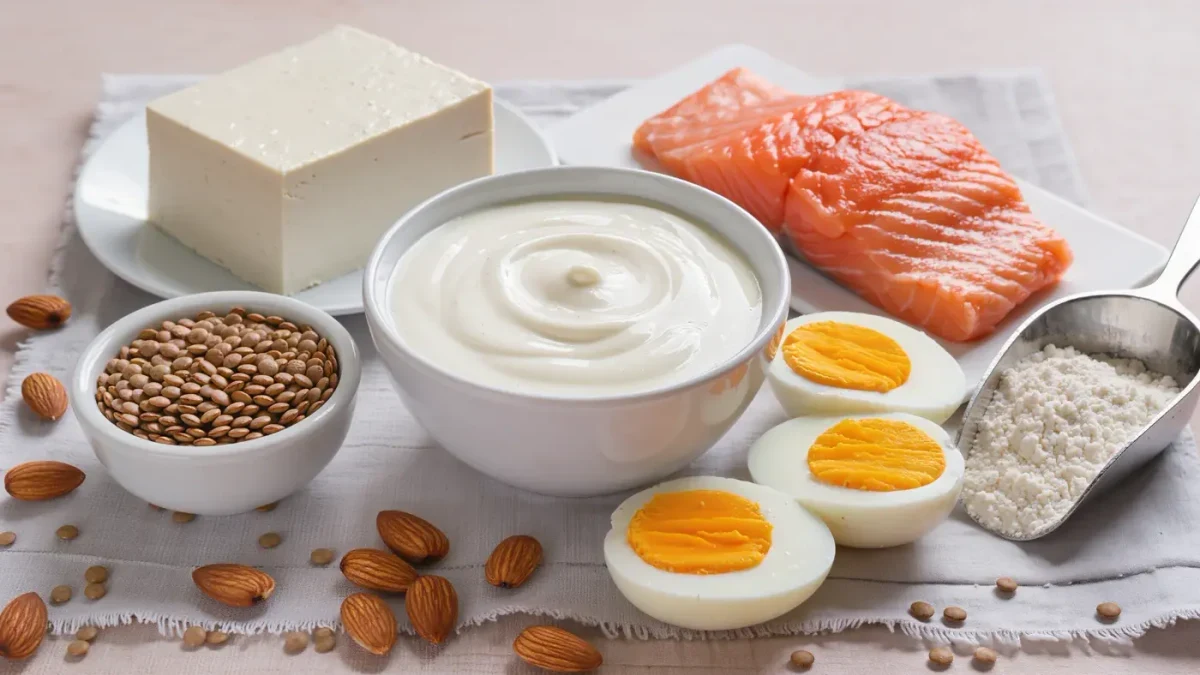
- Strong anchors: chicken or turkey breast (about 26 g protein per 100 g cooked), fish (20 to 24 g), Greek yogurt (10 g per 100 g), eggs (6 to 7 g each), cottage cheese.
- Plant staples: lentils and beans (about 8 to 9 g per cooked cup, plus fiber), tofu and tempeh (10 to 19 g per 100 g), edamame, quinoa. Pairing legumes with grains across the day covers the amino-acid gaps without fuss.
- Useful extras: a scoop of whey or pea protein powder in oatmeal or a smoothie is an inexpensive way to fix a weak breakfast; milk or fortified soy milk beats most alternatives by the glass.
MedlinePlus, the NIH's consumer health library, lists meats, poultry, fish, eggs, dairy, seeds, nuts, and legumes among standard protein foods, and most people meet total needs without supplements. The pattern worth copying is the Mediterranean-style one: fish, poultry, dairy, and legumes featured regularly, processed meat as a rare guest. Harvard's nutrition researchers have long flagged processed meat's association with higher cardiovascular and cancer risk in cohort studies — one more reason a grilled chicken thigh beats a daily salami sandwich.
Frequently asked questions
Is too much protein bad for the kidneys?
In people with healthy kidneys, review literature has found no consistent evidence that intakes up to roughly 1.5 to 2 g/kg cause harm. With existing chronic kidney disease, the advice is different and individual — protein is often moderated, so set your target with your nephrologist or dietitian, not from general charts.
Do I need protein powder?
No, though it is a legitimate convenience. If three meals each anchor around 25 to 30 grams from food — eggs, dairy, fish, poultry, tofu, legumes — you are covered. Powder simply makes the arithmetic easier on rushed mornings or after workouts for people who struggle to eat enough.
Does protein intake matter before 50?
Yes, differently. In younger adults the goal is maintaining muscle and supporting training rather than fighting anabolic resistance. The sports-nutrition ranges (1.6 to 2.2 g/kg for serious lifters) apply at any age; the age-specific urgency of distribution and adequacy simply rises after midlife as muscle loss quietly begins.