A digital sunset means stopping recreational screen use 30 to 60 minutes before your intended bedtime, and it works through two distinct routes: bright and close-range light delays your circadian clock's melatonin release, while stimulating content keeps your mind aroused regardless of brightness. The Sleep Foundation identifies evening screen use as a common contributor to delayed sleep onset as of 2024, and a widely cited 2017 meta-analysis in Sleep Medicine Reviews found that bedtime screen use was associated with inadequate sleep across studies of children and adults.
Persistent insomnia — trouble falling or staying asleep three or more nights a week for months — is a medical topic, and cognitive behavioral therapy for insomnia (CBT-I) is the first-line treatment clinicians recommend, not any screen rule.
Is it the light from screens, or the content?
Both, and separating them explains why some people can scroll and sleep while others cannot. The light route: your circadian system is most sensitive to blue-wavelength light in the early evening, and the AASM-funded research summarized by the American Academy of Sleep Medicine shows evening light exposure suppresses melatonin and delays the clock. But a phone held 30 centimeters from your eyes delivers far more lux to the retina than a TV across the room, which is why casual television often costs you less sleep than a horizontal feed session.
The content route runs on arousal. An argument in the group chat, a work email, or an algorithmically endless cliffhanger activates the same alerting systems you are trying to switch off — researchers studying pre-sleep cognitive arousal have long identified a busy mind as one of the strongest predictors of delayed sleep onset. Dark mode and night filters address the first route only; they do nothing about a feed engineered to keep you engaged. This is why the digital sunset is a time boundary rather than a brightness setting.
How long before bed should screens go off?
There is no single tested number, but 30 to 60 minutes is the practical consensus range — the Sleep Foundation's guidance for better sleep describes stopping device use about an hour before bed as a reasonable target, and even 30 minutes captures most of the arousal benefit. Start there and adjust by symptoms: if you put the phone down at 10:30 and are asleep by 11, your sunset is working. If you are still awake at midnight with a quiet mind, the issue may be schedule or timing rather than screens.
Two honest caveats keep this realistic. First, occasional late-night screens are not a disaster; the habit matters as a weekly pattern. Second, essential screen use is real — a parent on call or a late shift worker cannot simply switch off. The goal is a boundary around recreational use, not a vow of darkness.
What do I actually do instead for 30 to 60 minutes?
The sunset needs replacement activities, or it collapses on contact with boredom. What reliably works is analog, low-light, and low-stakes:
- Paper reading. The classic for a reason — research on reading before sleep, including a 2021 trial in Trials published by BMC, found that reading a book in bed before sleep improved perceived sleep quality compared with no reading. Fiction beats email.
- Physical wind-down. Gentle stretching, a warm shower or bath — the drop in body temperature afterward is itself a sleep-promoting signal described by the Sleep Foundation.
- Prep for tomorrow. Clothes out, coffee set, bag packed. Ten minutes of logistics removes tomorrow-morning's excuse for grabbing the phone immediately.
- Low-key conversation or music. Quiet social time is arousal-neutral for most people, unlike feeds, which are engineered to spike engagement.
How do I set up a digital sunset without willpower failures?
Make the boundary physical and automatic, because motivation is reliably absent at 10:45 p.m.:
- Pick a real time. "Before bed" is unfalsifiable; "10:15 on weeknights" is checkable. Set it 30 to 60 minutes before your target lights-out.
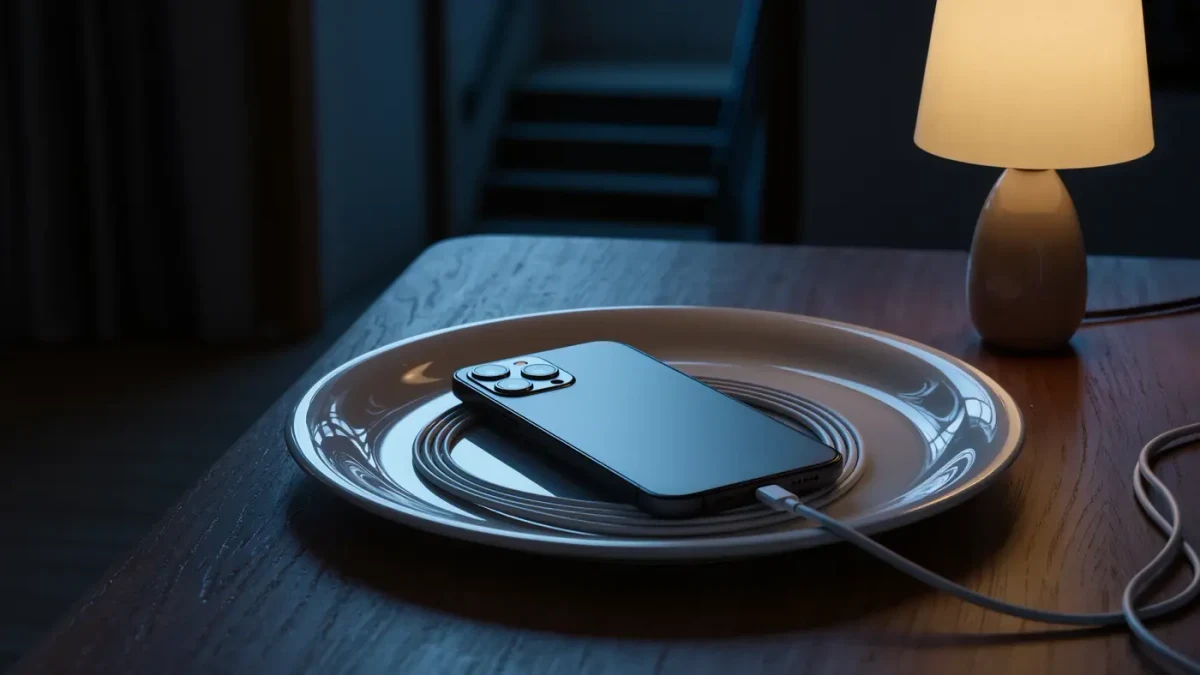
- Charge outside the bedroom. This is the single highest-impact change — the CDC's sleep tips include keeping screens out of the bedroom, and an alarm clock that is not your phone removes the last legitimate excuse.
- Use the phone's own tools. Built-in downtime or focus schedules, plus app limits, automate the announcement. Grayscale mode in the evening makes feeds noticeably less compelling, a trick borrowed from research on how color drives engagement.
- Give exceptions a protocol. Late social plans or a genuine emergency are fine. The rule for exceptions: use, finish, place the phone on the kitchen charger, and proceed — one broken sunset is noise; a rebuilt one the next night is the habit.
FAQ
Do night mode and blue-light filters make screens safe before bed?
Not fully. Filters reduce the light-driven melatonin suppression, which helps, but they do nothing about psychological arousal from content — and lab studies comparing filter effects on sleep have shown mixed results. Treat night mode as a harm reducer for unavoidable evening use, not a license for a full feed session under the covers.
Is watching TV before bed really that bad?
It is the most forgivable screen. A TV across the room delivers far less light to your eyes than a handheld device, and passive watching is less arousing than interactive scrolling. The problems are timing and volume: a three-season binge ending at 1 a.m. is a schedule problem, not a light problem. One episode with the sunset time still respected is a reasonable compromise most sleep clinicians accept.
My job requires evenings on screen. What then?
Boundary the recovery window instead: 30 minutes screen-free between your last work session and lights-out, with brightness low and the screen at distance where possible. Shift workers and heavy evening users may also benefit from asking a clinician about light-timing strategies, since circadian researchers note that scheduled light and dark exposure is the main lever when your occupation controls your evening.