Forget batch-cooking twenty portions: the realistic version is component prep — roast two trays of vegetables, cook one pot of grains, prepare two proteins and one sauce, and mix them differently all week, in about 90 minutes on Sunday. USDA data on food waste shows Americans toss roughly a third of the food supply as of 2023, and meal systems that survive are the ones flexible enough to survive a Thursday pizza order too.
If you are cooking for allergies, a medical diet, or specific nutrition targets, a registered dietitian is the right expert to adapt these ideas to your numbers.
Why does traditional meal prep fail for most people?
Classic meal prep fails on two fronts, and both are about psychology more than logistics. First, the repetition problem: eating your fifth identical container of chili on Friday feels like a punishment, which is why so many prepped meals end up in the office fridge graveyard. Food enjoyment research is blunt on this — variety drives satisfaction, and satisfaction drives whether the habit continues past week two.
Second, the sacrifice problem: a four-hour Sunday cooking marathon is a tax you pay all week in the form of dread. Behavior-change research consistently shows that habits requiring large weekly willpower payments get skipped exactly when life is busiest, which is precisely when a ready meal matters most. The fix is to prep components, not meals, and to cap the effort at something you would do even on a bad Sunday — about 90 minutes.
What is component prep, exactly?
You cook versatile building blocks rather than finished recipes, then assemble each meal in minutes. A workable starter kit:
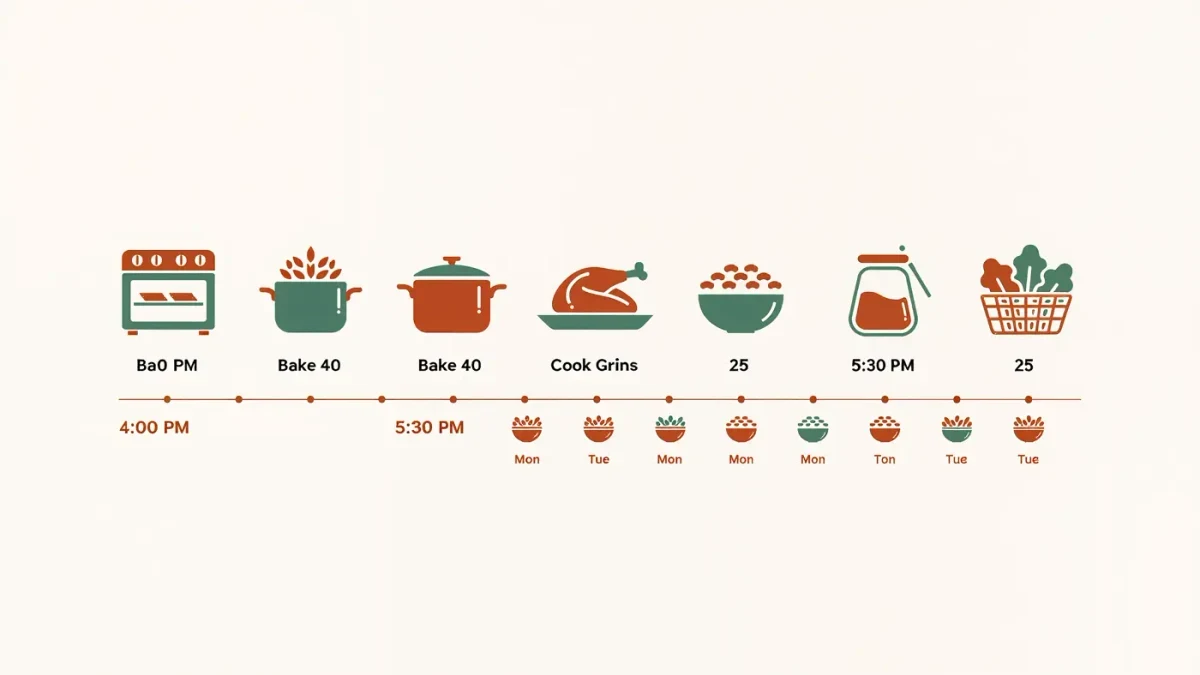
- Two trays of roasted vegetables. One hardy tray — broccoli, carrots, red onion at 425°F for about 25 minutes — and one quick tray — zucchini, cherry tomatoes, 20 minutes. Different flavors, same oven session.
- One pot of grains. Rice, farro, or quinoa, cooked in salted water, keeps about four days refrigerated per standard food safety guidance. Cooked grains also freeze well in flat bags.
- Two proteins, one hands-off. A tray of chicken thighs roasted alongside the vegetables, plus a zero-effort protein like canned beans, lentils, or baked tofu.
- One bold sauce. A lemon-tahini, peanut, or yogurt-herb sauce in a jar. This is the single highest-leverage item: it makes Tuesday's components taste like a different meal from Wednesday's.
- One fresh element bought, not cooked. Salad greens, cucumbers, avocado. Cold crunch against warm components is what stops prep from tasting like leftovers.
Assemble differently each day: grain bowl with tahini on Monday, components wrapped in tortillas Tuesday, greens-plus-roasted-veg salad Wednesday, grain bowl with the second sauce Thursday. Same five blocks, four distinct meals.
How do I keep prepped food safe to eat?
Food safety is where enthusiasm most often outruns storage. The USDA Food Safety and Inspection Service advises refrigerating cooked food within two hours, keeping the fridge at or below 40°F, and eating most cooked leftovers within three to four days as of its current guidance — which is why a five-day plan is one day too long, and anything for Friday belongs in the freezer on Sunday. Cool large pots quickly by dividing them into shallow containers, and reheat until steaming all the way through, 165°F if you use a thermometer. Rice has its own rule: cool it quickly and refrigerate within the hour if possible, because Bacillus cereus spores survive cooking and multiply at room temperature.
What if I genuinely cannot face 90 minutes on Sunday?
Shrink the unit of commitment. The 20-minute version, done any weeknight, still changes your week:
- Monday, 20 minutes: one tray of roasted vegetables plus a pot of rice while the oven runs. That covers lunches for three days on its own.
- Wednesday, 15 minutes: refresh with a second protein and a new sauce. Two mini sessions beat one marathon for most people who hate prep, because no single session ever feels like an event.
- Emergency layer: keep three no-cook meals in permanent reserve — canned bean soup, good bread, cheese, fruit, frozen dumplings. A fallback meal stops one skipped prep session from becoming four takeout orders.
Prep should also match your actual eating, not an imagined version of you. If you hate cold lunches, prep warm-assembly components. If you cook for one, halve everything; USDA guidance is about safety timelines, not portion minimums, and the freezer is your friend for anything past day four.
FAQ
How many days ahead is it actually safe to prep?
Most cooked components keep three to four days refrigerated per USDA Food Safety and Inspection Service guidance, so Sunday prep comfortably covers Monday through Thursday. For Friday and beyond, freeze portions on the day you cook and thaw overnight in the fridge. Raw poultry prepped in advance gets the same three-to-four-day ceiling, so marinate and freeze rather than raw-prepping a week ahead.
Do glass containers matter, or is plastic fine?
Functionally, both are fine — what matters is shallow, airtight, and stackable. Glass wins on longevity, stain resistance, and going straight from fridge to oven-safe reheating, and it will not absorb the peanut sauce you prepped in March. If you use plastic, replace containers once they are stained or rough, and skip microwaving anything not rated for it.
What should I prep if I hate reheated food?
Prep for assembly instead of reheating. Components that are good cold or at room temperature — grains fluffed with olive oil, roasted vegetables straight from the fridge, beans, hard-boiled eggs, cheeses, sturdy greens — cover most of a week. Reheat only the sauce or the protein for two minutes, keep everything else cold, and the meal reads fresh rather than microwaved.