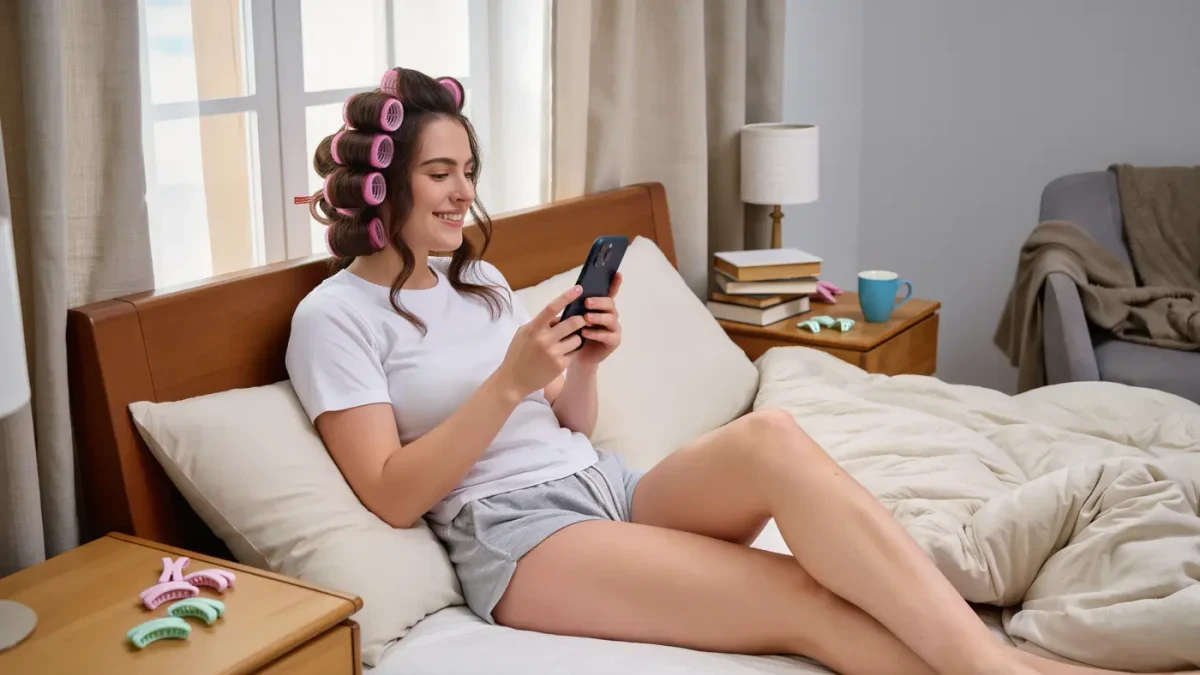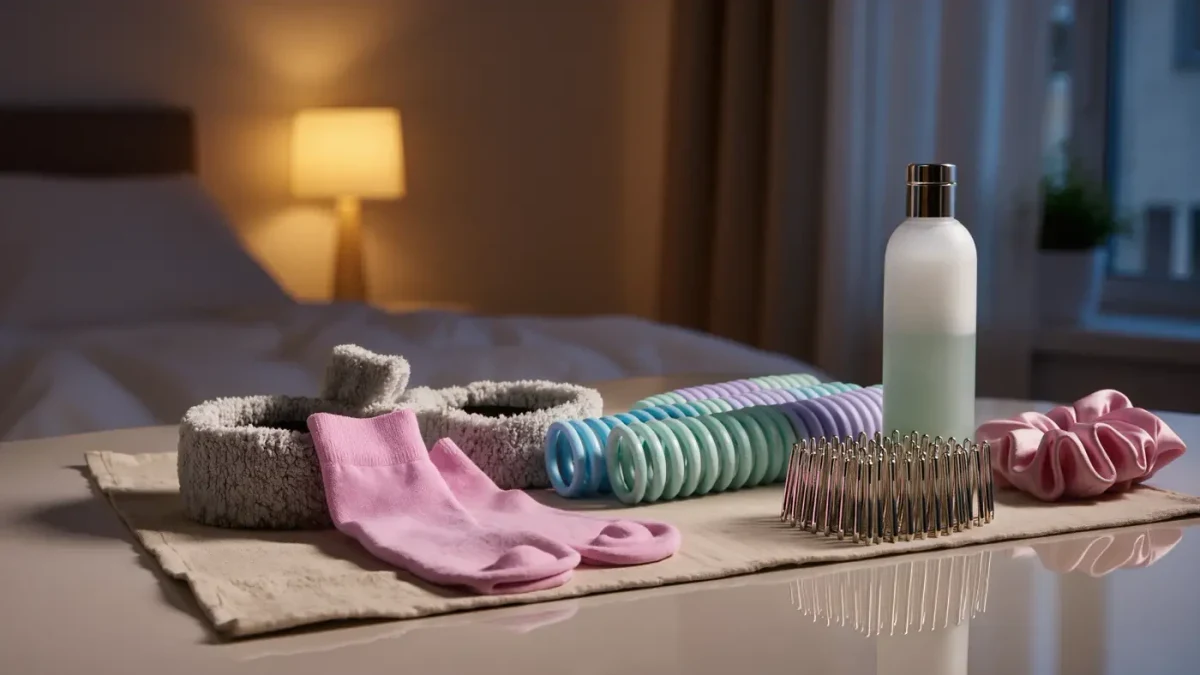
All four main heatless methods — the sock bun, the robe-tie heatless curls, flexi rods, and classic pin curls — genuinely produce overnight curls; the differences are the curl pattern (loose waves versus defined ringlets), comfort while you sleep, and how much practice the setup takes. The principle is identical for every method: hair reshapes as it dries and cools, and per the heat-styling literature, hydrogen bonds in the hair break when wet and reform in whatever shape the hair holds while drying. No heat required — just time and tension. What follows is each method, ranked by ease, with the honest trade-offs.
VOLEWO publishes information, not medical or beauty advice. One universal caution before the comparisons: never wrap soaking-wet hair overnight. Hair is at its weakest when wet, per dermatology sources including the American Academy of Dermatology, and eight hours of tension on saturated strands invites breakage at the hairline. Damp-to-nearly-dry is the setting sweet spot.
Method one: the sock bun (easiest, softest waves)
Mist damp hair with leave-in, gather it into a high ponytail, wrap the lengths around two rolled socks (or one, for a single bun) secured at the base, and sleep. Morning result: loose, brushed-out waves with volume at the crown — the most forgiving method and the one that survives a restless night best. Setup takes three minutes and requires nothing you do not own. Trade-offs: the pattern is the least defined of the four, and if your hair is very long, the wrapped weight can loosen overnight. Best for: shoulder-length to long hair, anyone new to heatless styling, low-maintenance mornings where a thirty-second brush-out is the plan.
Method two: the robe tie heatless curls (best definition-to-effort ratio)
The method that took over social platforms in the early 2020s: secure a soft robe tie or cylindrical curling rod on top of your head like a headband, then wrap two sections of nearly-dry hair around each side from front to back, coil the ends, and secure with a scrunchie. Morning result: uniform, bouncy curls with a 90s-blowout energy, especially if you set the front sections away from the face. Setup takes five to ten minutes and two or three practice rounds before it stops feeling fiddly. Trade-offs: sleeping with a rod across your crown takes a night or two to get used to, and very short hair (above the chin) lacks the length to wrap properly. Best for: medium to long hair, defined curls, anyone willing to practice one technique well.
Method three: flexi rods (most defined curls, most sleep disruption)
Twist each small section of damp hair around a flexible foam rod, bend the ends to hold, and repeat eight to twelve times across the head. Morning result: the most springy, defined ringlets of any method — the smaller the section and rod, the tighter the curl. Because hair dries inside an open spiral, the pattern holds for two to three days, longer than any other method. Trade-offs: this is the least comfortable night (foam tubes everywhere), the longest setup, and the steepest learning curve — uneven tension shows in the morning. Foam thickness matters: per the product sizing conventions across flexi rod brands, thin rods for tight curls, thick rods for loose waves. Best for: special occasions, textured and curly hair that wants pattern refresh without heat.
Method four: pin curls (the vintage original, best for short hair)
Wrap small sections of nearly-dry hair flat against the scalp in circular pin-curl clips or bobby pins, pinning each coil flat. Morning result: polished, sculpted waves with a distinctly retro finish — think mid-century set rather than beach texture. It is the only method that works well on chin-length or shorter hair, and because the curls sit flat against the head, a silk scarf or bonnet over the top makes it the most sleep-compatible of the four. Trade-offs: the smallest sections mean the longest setup (fifteen minutes or more for a full head), and pin marks can show if you skip the brush-out. Best for: short to medium hair, vintage-leaning waves, anyone who already sleeps in a cap.
How do you make any heatless set last longer?
Prep, dryness level, and the morning ritual decide it. Prep damp (not wet) hair with a lightweight mousse or setting foam — per the formulation documentation of styling foams, flexible polymers are what help a set hold through humidity. The drier your hair is when you wrap it, the faster it sets and the longer the shape holds; hair that is 70–80% dry overnight is the working standard. In the morning, do not finger-comb: let the set cool completely, then separate curls with a drop of oil on your palms and finish with a light-hold spray at the roots only. Sleeping on a silk pillowcase or in a loose bun on night two preserves the pattern for a third day.
Which method should you start with?
The sock bun on your first night, the robe tie once the concept clicks. The sock bun teaches you your hair's damp-to-dry overnight behavior with zero investment, and its soft waves are impossible to ruin. Move to the robe tie when you want real definition, and keep flexi rods and pin curls in reserve for occasions that justify a fussier night. A realistic expectation on any first attempt: one side will come out better than the other. That is not a method failure — it is section tension, and it evens out by attempt three.
FAQ
Do heatless curls damage hair? Less than hot tools, with one exception. There is no thermal damage — per the AAD's guidance on heat styling, high heat is what degrades the hair's protein structure. The exception is tension: tight wrapping on wet hair, night after night, can stress the hairline. Keep hair damp-to-nearly-dry, keep wraps snug but never tight, and vary the placement across nights.
How damp should hair be for overnight curls? Around 70 to 80% dry — bends when you pull it, no water dripping, cool to the touch. Wet hair is at its most fragile and may still be damp by morning inside thick wraps, which means the set never finishes. If you wash at night, wrap after a towel-blot and ten to fifteen minutes of air drying.
Why did my curls fall out by lunchtime? Usually one of three things: hair was too wet when wrapped, the set was brushed out before it fully cooled, or no product was used. Redo the set at 70–80% dryness, wait at least ten minutes after unwrapping before touching the curls, and add a light mousse at prep. Straight, fine, product-free hair is the hardest canvas for any overnight method.