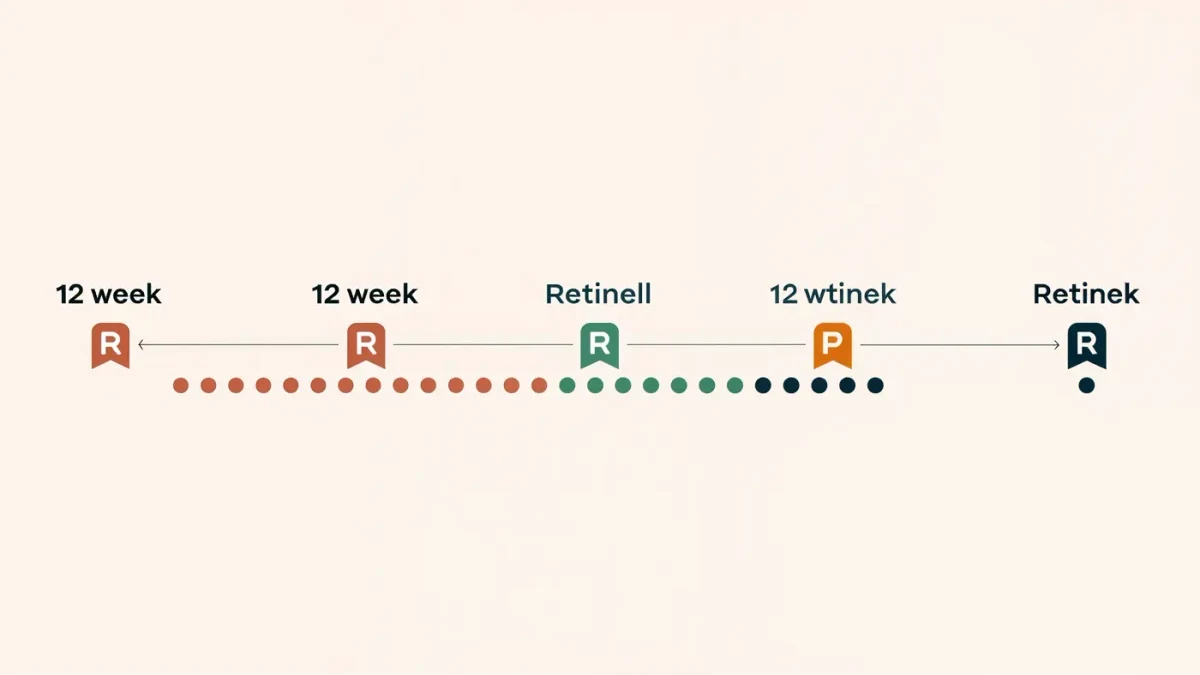
Start retinol twice a week for two weeks, then build toward every other night by week six and nightly only if your skin stays calm — most people need about 12 weeks to reach comfortable regular use. The American Academy of Dermatology notes that retinoids are among the most studied topical ingredients for fine lines and acne, but also that irritation is the number-one reason beginners quit. A slow schedule fixes that. This is a marathon measured in months, and the skin cells you renew on the way take roughly 28 days per cycle to turn over.
VOLEWO publishes information, not medical or skincare advice. Retinoids are not for everyone: if you are pregnant, breastfeeding, or managing a skin condition like rosacea or eczema, clear any retinoid use with a doctor first. The plan below is general guidance as of 2026, drawn from dermatology sources and the way retinol products are typically labeled.
How many nights a week should you use retinol at first?
Two non-consecutive nights a week for the first two weeks — for example Tuesday and Saturday. That low frequency is deliberate: retinol speeds up cell turnover, and skin that has never encountered it often responds with dryness, tightness, and light peeling before it adapts. Starting at twice weekly lets your skin barrier adjust while you learn how your particular formula feels. Per the AAD's general guidance on retinoids, applying product to dry skin and reducing frequency are the two levers that most reduce irritation, and frequency is the easier one for beginners to control.
What does the sandwich method actually involve?
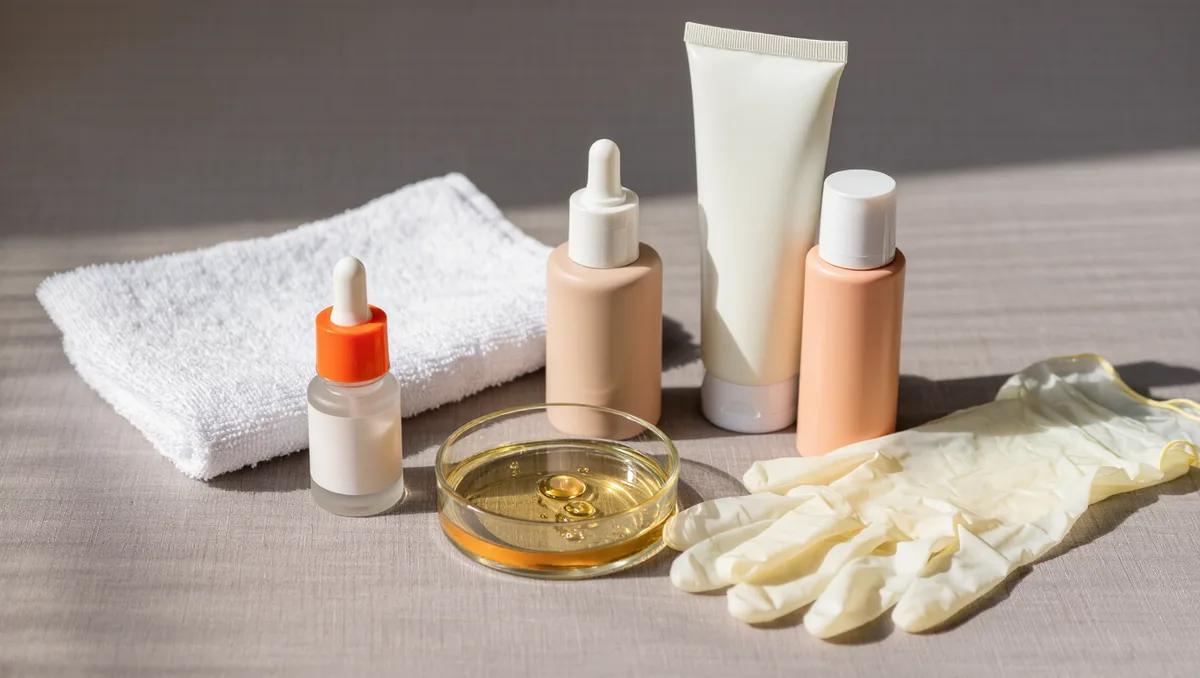
Three layers: moisturizer, retinol, moisturizer. You apply a thin layer of plain moisturizer to clean dry skin, wait a minute, apply your pea-sized amount of retinol, then seal with another thin layer of moisturizer. The idea, widely used by dermatologists in clinical practice and described in patient guidance from sources including the AAD, is that the bottom layer buffers the retinol so it absorbs more gradually — you trade a small amount of potency for a large reduction in stinging and peeling. Research on tretinoin from the 1990s showed the active still penetrates effectively through this method, so the benefit is comfort, not cancellation.
Use the sandwich for your first month, then experiment with applying retinol directly to skin on your stronger nights. Some skin graduates; some skin prefers the buffer forever. Both are fine.
The 12-week beginner schedule
| Weeks | Frequency | Notes |
|---|---|---|
| 1–2 | 2 nights per week | Pea-sized amount, sandwich method, lowest strength you can find (0.2–0.3%) |
| 3–4 | 3 nights per week | Keep the sandwich. Mild tightness is normal; flaking is a signal to slow down |
| 5–8 | Every other night | If skin is calm, try retinol directly on skin before moisturizer on one of the nights |
| 9–12 | Every other night, or nightly if comfortable | Consider stepping up to 0.5% only after 4 full calm weeks |
| 13+ | Maintenance | Nightly or every other night at your chosen strength; results typically assessable here |
Write the schedule on a sticky note or set phone reminders for the first month — the most common beginner mistake is improvising frequency night by night based on memory, which usually means too often.
How much retinol should you apply?
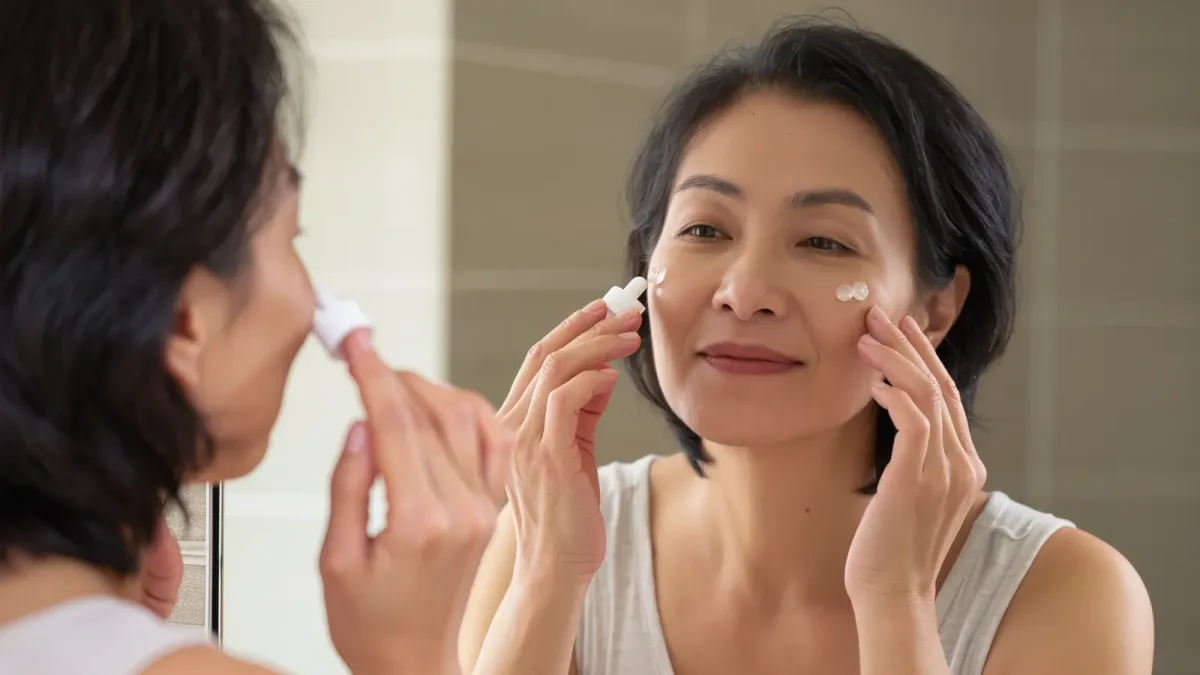
A pea-sized amount for the entire face, no more. Squeezing out extra does not speed results; it just increases the contact dose your barrier has to tolerate. Dot it across your forehead, cheeks, nose, and chin, then spread with a light touch. Keep it away from the corners of the nose and mouth and the orbital bone area, where skin is thinner and reacts first — per product labeling conventions across major retinol brands, those zones are explicitly excluded. Wash your hands after applying.
What should you do when irritation shows up?
Pause, moisturize, and restart one step lower on the schedule. If you get visible flaking, redness that lasts beyond an hour, or a burning sensation, skip the next two scheduled retinol nights and use only cleanser, moisturizer, and SPF until your skin feels normal again. Then resume at the previous frequency level — not the one that irritated you. The AAD's guidance on retinoid side effects consistently frames this kind of planned break as part of retinization, not failure.
- Scale back actives elsewhere: while adjusting to retinol, drop exfoliating acids (glycolic, salicylic) and vitamin C from the same days. One active at a time.
- Moisturize generously in the morning: ingredients like ceramides, glycerin, and panthenol support the barrier retinol is temporarily stressing.
- Never skip SPF: retinoids can increase sun sensitivity, and every dermatology source agrees daily broad-spectrum sunscreen is mandatory on this routine.
When do retinol results actually appear?
Texture changes first, discoloration later. Per the timelines used in published retinol trials — including a frequently cited 2015 randomized study of 0.1% retinol in the Journal of Investigative Dermatology showing increased collagen synthesis in 12 weeks — expect smoother texture and fewer clogged pores around weeks 8 to 12, with fine lines and dark spots improving over 4 to 6 months of consistent use. The purge myth deserves one honest note: retinol genuinely accelerates clogged pores coming to the surface, so some people see more small blemishes in weeks 2 to 6. If breakouts persist past three months, that is worth a dermatologist conversation rather than more patience.
FAQ
Can I use retinol under my eyes? Cautiously, and only after your cheeks have adjusted. Under-eye skin is the thinnest on the face and reacts first. Once you have 8 comfortable weeks elsewhere, you can extend a tiny residue of retinol from your ring finger along the orbital bone — never on the eyelid — buffered by moisturizer. If it stings, the eye area stays retinol-free.
What strength should a true beginner buy? Between 0.2% and 0.3% retinol, ideally from a brand that states the percentage on the label. Prescription-strength tretinoin is a different molecule and a different conversation for a dermatologist. You can always step up later; recovering from starting too strong takes longer than the head start was worth.
Do I really have to use retinol only at night? Yes — retinol degrades in UV light, which is why every retinol product's documentation says to apply it in the evening. Morning application wastes the product and offers no advantage. Save your mornings for vitamin C, moisturizer, and SPF.