The correct skincare order follows one principle: thinnest texture to thickest, water-based products before oil-based ones, with sunscreen always last in the morning and your heaviest cream last at night. Dermatology guidance, including the American Academy of Dermatology's skin care routine advice, keeps the essential list deliberately short — cleanser, moisturizer, sunscreen — and everything else slots in by weight. Get the sequence right and each product absorbs properly instead of sitting on a sealed surface. Get it wrong and you can waste the most expensive serum in your cabinet by locking it out.
VOLEWO publishes information, not medical or skincare advice. If you use prescription topicals, your dermatologist's instructions on placement override everything below. This guide reflects general dermatology sources and product documentation as of 2026.
What is the correct morning order?
Cleanser, toner or essence (optional), treatment serum, eye product, moisturizer, sunscreen. That is the whole template. In practice: cleanse with lukewarm water, apply your water-lightest product first — a vitamin C serum or hydrating essence — then any thicker treatment, then moisturizer, then a broad-spectrum SPF 30 or higher as the unskippable final step. Per the AAD, sunscreen is the single most effective daily product for preventing visible skin aging, and its placement last is non-negotiable because it must form the outermost layer. If your moisturizer contains SPF, it can serve as the final step, though most people under-apply moisturizer relative to the tested sunscreen dose — a dedicated SPF layered on top removes that doubt.
What is the correct evening order?
Makeup remover or cleansing balm, water-based cleanser, toner, treatment products (retinol, exfoliating acids, niacinamide), moisturizer or facial oil. The double cleanse is the one evening step worth formalizing: an oil-based first pass dissolves sunscreen and makeup — oil dissolves oil, basic chemistry — and the water-based second pass cleans skin itself. Per the AAD's guidance on washing, harsh scrubbing adds nothing; the evening cleanse needs friction-free patience, not force. Then treatments go on clean, dry skin so they penetrate directly rather than through a film of cream, and your heaviest product closes the routine and seals everything beneath it.
Does waiting time between layers actually matter?
For most products, no — 30 seconds to a minute of absorption time is plenty, and the popular ten-minute rule has no research behind it. The exceptions worth honoring: give actives like retinol and vitamin C a minute on bare skin before the next layer, as their product documentation typically advises, so a heavier cream does not sit between them and the skin. And when you are using an exfoliating acid one night and a retinoid the same evening, either separate them by 20 to 30 minutes or — the simpler solution most dermatologists prefer — put them on different nights entirely. Waiting times are about comfort and pilling far more than chemistry; products do not cancel each other on contact the way beauty folklore claims.
Which products should never be layered together?
Fewer than the internet suggests — the real conflicts are about irritation, not incompatibility. The pairs to separate:
- Retinol and strong exfoliating acids (glycolic, salicylic) on the same night: not a chemical clash, just compounded irritation. Per AAD guidance on retinoid use, alternating nights is the standard solution.
- Vitamin C and exfoliating acids in the same morning: same logic. Acids in the evening, vitamin C in the morning solves it by scheduling.
- Benzoyl peroxide and retinoids: per the AAD's acne treatment guidance, benzoyl peroxide can degrade certain retinoid formulations, so prescription pairings should follow a dermatologist's placement instructions.
The famous vitamin C–niacinamide conflict, for the record, was debunked: the original interaction was demonstrated at unrealistically high temperatures, and modern formulations routinely combine both ingredients. If they already live in one bottle together, no amount of layering order is needed.
Where do face oils, mists, and masks fit?
Face oils go last at night, after moisturizer — they are occlusive, meaning they seal, and anything applied over an occlusive mostly stays on top of it. Facial mists are optional hydration at any point before heavier creams; they are pleasant, not essential. Wash-off masks come right after cleansing, before treatments. Overnight masks replace or follow your evening moisturizer as the final step, per their documentation. The only genuinely confusing category is hydrating serums with hyaluronic acid: they are thin, so they go early, but they work best on damp skin and under a sealing cream — applied to dry skin in dry air, a hyaluronic serum can feel tight because it pulls water from wherever it can, per the formulation behavior described in dermatology writing on humectants.
A printable order for both routines
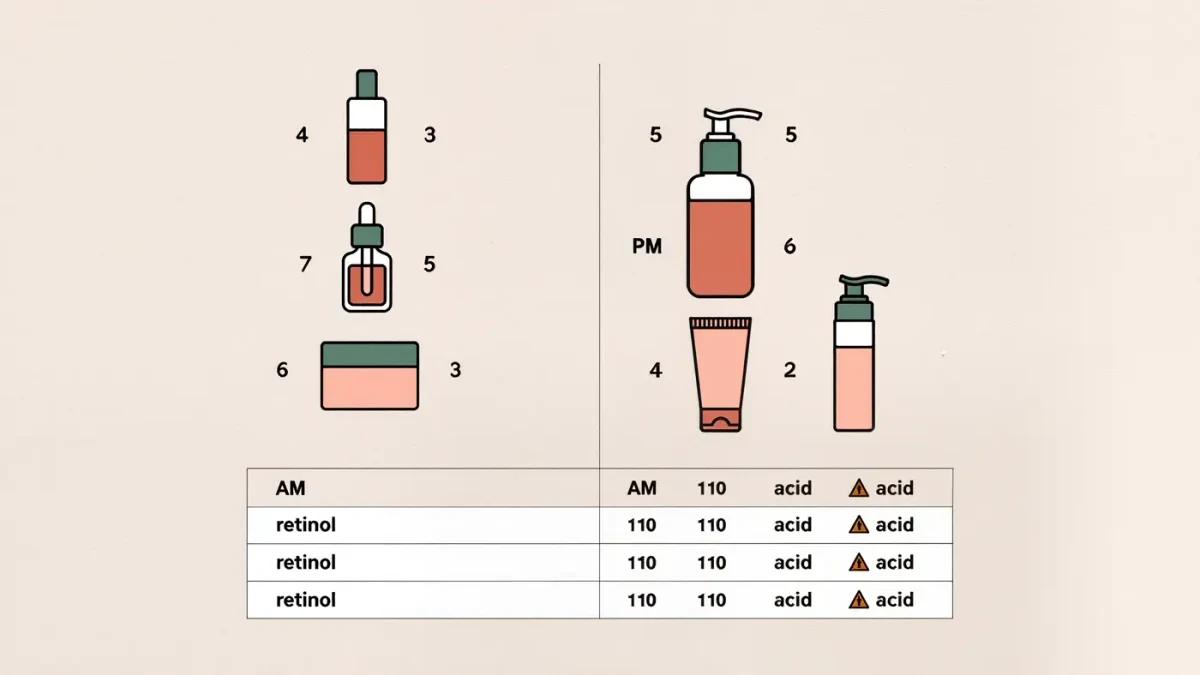
| Step | AM | PM |
|---|---|---|
| 1 | Gentle cleanser (or water rinse) | Cleansing balm / micellar, then water-based cleanser |
| 2 | Toner or essence (optional) | Toner or essence (optional) |
| 3 | Vitamin C or hydrating serum | Treatment: retinol, acid, or niacinamide |
| 4 | Eye cream (optional) | Eye product (optional) |
| 5 | Moisturizer | Moisturizer |
| 6 | Broad-spectrum SPF 30+ | Facial oil or overnight mask (optional) |
Keep the routine to the steps you will actually do for ninety consecutive days. Per the AAD, consistency is what produces visible results in skincare — a six-step routine done weekly underperforms a three-step routine done nightly.
FAQ
Do I apply retinol before or after moisturizer? Either, deliberately. On bare skin gives maximum potency; layered over a light moisturizer (the sandwich method) buffers it for sensitive skin. Both are legitimate — the one wrong answer is after a heavy cream, which blocks absorption. Pick your approach based on how your skin responds and stay consistent with it.
Can I skip toner entirely? Yes, without losing anything essential. Modern toners are hydrating treatments rather than the astringent strippers of previous decades, so if one has a job — gentle exfoliation, extra hydration — place it after cleansing as step two. But per dermatology guidance, the essentials remain cleanser, moisturizer, and sunscreen; toner is a want, not a need.
How long should I wait between cleansing and applying serum? No dedicated wait is needed — just apply to dry skin rather than dripping wet, since soaked skin dilutes the product and increases pilling risk. Pat dry with a clean towel, then apply within a minute. The damp-skin exception is hyaluronic acid serums, which per their formulation behavior grip best onto slightly damp skin.