You can reapply SPF over makeup: use a sunscreen stick pressed (never rubbed) over the face, a mineral powder with SPF swept on with a puff, or a fine-mist spray held at arm's length — and you should do it every two hours of daylight exposure, per the American Academy of Dermatology's sun protection guidance. The two-hour rule exists because UV filters break down and rub off; it applies whether your face is bare or fully done. The trick is not inventing a new product category, it is choosing the right delivery method for a face that already has concealer and blush on it.
If you have had skin cancer, or a mole that is changing, a dermatologist — not a magazine — is your correct resource. Guidance below reflects AAD and FDA sun protection information as of 2026.
How much SPF do you actually need to reapply?
The full label dose is one ounce for the whole body and roughly a quarter teaspoon for the face — and per FDA labeling rules, every SPF product is tested at that dose. Reapplying at half that amount means roughly half the stated protection, which is the honest math behind the advice that generous, repeated application beats one precise layer. Over makeup you will never hit the full quarter teaspoon with a powder alone; that is fine as long as you know the trade-off. A stick can genuinely deliver a substantial dose because you can build it in layers, which is why it tops this list.
Method one: the sunscreen stick (best dose, needs technique)
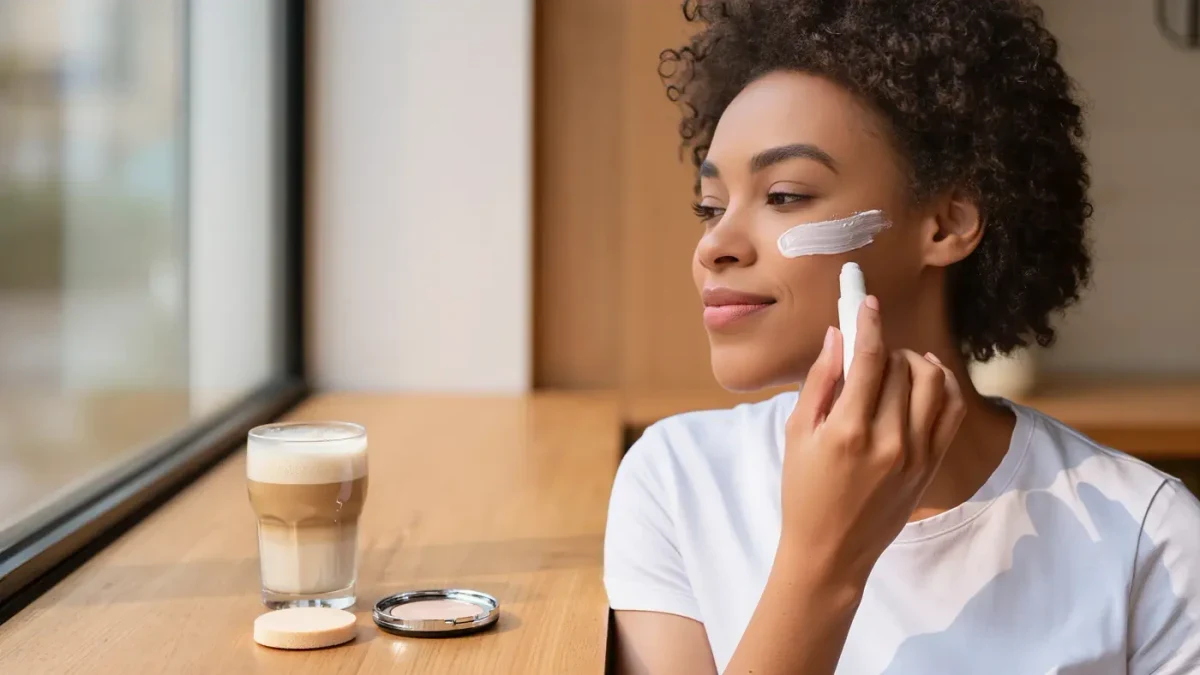
A solid sunscreen stick is the closest thing to a true SPF reapplication that makeup can survive. The technique: swipe the stick in straight strokes across your forehead, cheeks, nose, and chin, then press — do not smear — the product in with your fingertips or a damp sponge using a stamping motion. Stamping displaces far less foundation than rubbing. Per the brand documentation of major stick sunscreens, several passes are needed to approach the tested dose, so go over each zone two or three times. The finish is dewy rather than matte, which reads as intentional glow on most skin and can be blotted lightly with a tissue if you prefer matte. On a beach day with minimal makeup, a stick over the whole face is genuinely sufficient protection.
Method two: SPF powder (most convenient, lightest dose)
A mineral powder with SPF — typically titanium dioxide and zinc oxide in a brush or compact — is the easiest reapplication over a full face, and the one you will actually use consistently. Per AAD guidance, the best sunscreen is the one you reapply, and convenience has real value. The honest limitation: lab testing of powder SPFs consistently shows that most people apply far less than the dose needed for the labeled protection, so treat powder as a top-up that maintains protection between two stronger applications rather than your primary SPF. Technique: tap the brush, press it against the skin in rolling motions over high points (nose, cheekbones, forehead), and reload the brush more often than feels necessary. Over powder blush it blends in cleanly; over cream blush it can grab, so blot first.
Method three: setting spray with SPF (fast, hardest to verify)
An SPF mist or setting spray with UV filters is the quickest option — hold the bottle six to eight inches from your face, close your eyes, and mist evenly for several seconds until your skin looks lightly dewy. Two honest caveats. First, per FDA testing conventions, sprays are dosed by duration, and consumer application studies routinely show under-dosing. Second, some mists contain alcohol, which can disturb fresh makeup less than you would fear but can sting sensitive skin. Choose a fine, continuous mist over an aerosol pump for an even veil, and follow with a quick press of a sponge to reset any disturbed concealer under the eyes.
What about makeup with SPF built in?
Foundation with SPF 30 is a useful baseline, not a substitute. Per the AAD, you would need about seven times the normal amount of foundation to reach its tested SPF — nobody applies that much. Think of SPF makeup as your first layer at 8 a.m. and the stick, powder, or mist as everything after 10 a.m. That division of labor is exactly how makeup artists who work outdoors handle long shoots.
A realistic reapplication day
- 8 a.m.: bare skin, full quarter-teaspoon of your regular sunscreen, then makeup as usual.
- 10:30 a.m.: SPF powder over makeup before you leave, or at your desk before lunch outdoors.
- 1 p.m.: sunscreen stick, two passes, pressed in with a sponge. Blot with tissue if glossy.
- 4 p.m.: powder or mist touch-up — mostly nose, cheekbones, ears, and the back of the neck, the zones skin cancers love.
Do not forget ears, eyelids, and the part in your hair — dermatologists flag these as chronically under-protected spots. And on a bright day, a wide-brim hat and shade do work no reapplication can; per the AAD's sun safety hierarchy, clothing and shade rank alongside sunscreen, not below it.
FAQ
Do I need to reapply SPF indoors? If you are by a window or in strong daylight through glass, yes — UVA passes through standard glass, per the Skin Cancer Foundation's guidance. In a windowless office, midday reapplication is unnecessary; apply your morning dose and reapply before your commute or any daylight plans.
Will a sunscreen stick break up my foundation? Less than you would expect if you press instead of rub. Straight swipes of the stick followed by stamping motions with a sponge disturb base makeup minimally; the finish reads as skin-like dew. Rubbing with fingers is what causes patchiness — the motion matters more than the product.
Is SPF powder enough on its own every day? No. Powders cannot deliver the tested dose in realistic use, per consumer application studies. Use your regular sunscreen as the foundational morning layer and treat powder as the maintenance tool between stronger applications — a genuine and useful role, just not a complete one.