Concealer creases because it is applied too thickly and set wrong, not because your under-eyes are doing anything unusual: the fix is a thin layer placed only where shadow falls, pressed in with warmth, and set with a whisper of powder — and it works with any mid-range concealer, per the application conventions professional makeup artists consistently describe. Under-eye skin is the thinnest on the face and moves with every blink, so any product sitting on top of it rather than pressed into it will settle into movement lines within an hour. The technique below takes four minutes and holds through a workday.
VOLEWO publishes information, not medical or beauty advice. Persistent under-eye discoloration sometimes relates to allergies, sleep, or genetics rather than cosmetics — a dermatologist can tell you which, and treat what makeup cannot. Guidance below reflects standard artistry practice as of 2026.
Why does under-eye concealer crease in the first place?
Three culprits, in order of likelihood: too much product, un-prepped skin, and no setting step. Concealer is an emulsion — when you pile it on, the excess has nowhere to go but into the fine lines that appear when you smile or squint. If the skin underneath is dry, it drinks the product's moisture unevenly, leaving patchy ridges. And unset concealer stays flexible, so every blink presses a line into it. Per the brand documentation of most major concealer lines, the product is designed to be built in thin layers — a single heavy application is the opposite of its intended use. Fix those three things and the creasing problem largely disappears, regardless of which concealer you own.
What does the prep step actually need?
Hydration, then a pause. Apply eye cream (something with humectants like glycerin or hyaluronic acid), then give it three to five minutes to absorb while you do the rest of your makeup. Concealer applied over a wet layer of eye cream slides and separates; concealer applied to unmoisturized skin grabs at dry patches and looks chalky by noon. The ideal prep state is skin that feels supple but not tacky. If your under-eyes are genuinely dry, a richer eye cream the night before does more than anything you can do at 8 a.m. — per the AAD's guidance on skin care, hydration is cumulative, and the under-eye area has few oil glands of its own to compensate.
Where should concealer go — and where should it not?
Only where shadow actually falls, which is a smaller zone than you think. Look up toward the ceiling in natural light: the shadow sits in a wedge from the inner corner slanting down and outward, ending roughly at the midpoint of the eye. That wedge is your target. Drawing concealer in a full arc under the entire eye loads product onto skin that needs none — the outer half — and that excess is precisely what folds into crow's-feet lines by mid-morning.
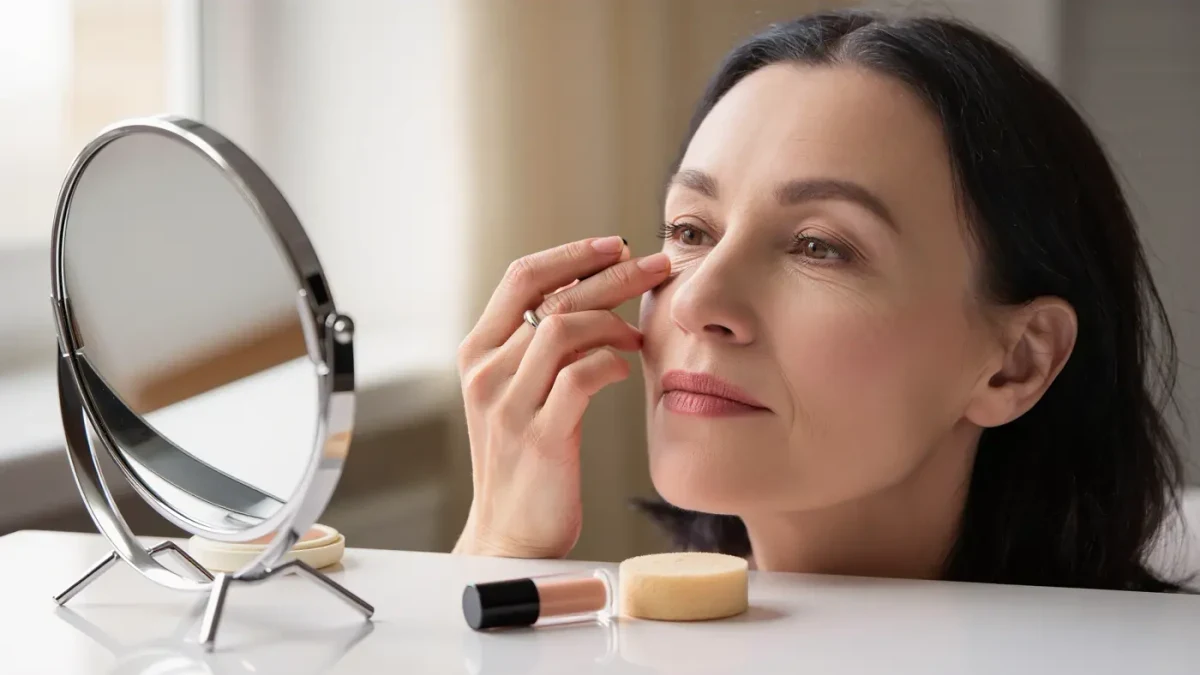
Application method: place three or four small dots or a single thin stroke of concealer inside the wedge, then press it in with your ring finger (the warmth helps the product meld) or a small damp sponge using a stamping motion. Build a second thin layer only if the first has not covered. Two thin layers beat one thick one every single time — this is the core rule of the entire technique.
What shade of under-eye concealer should you buy?
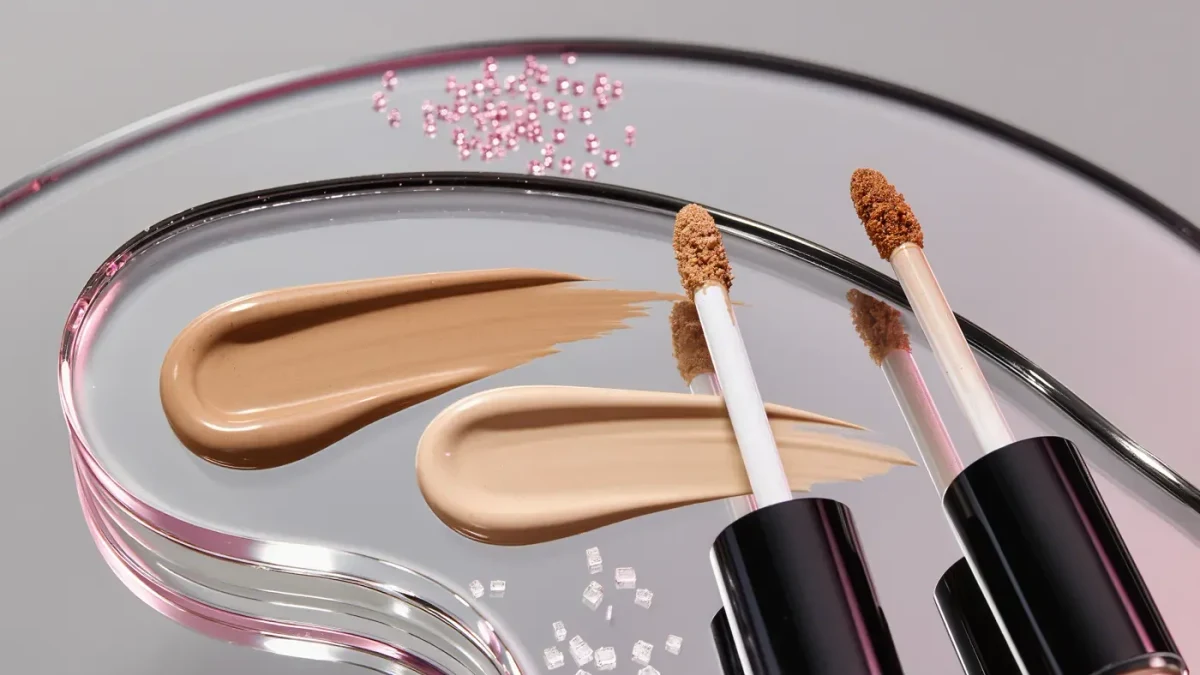
One that matches your skin tone exactly for coverage, with the option of a peach or orange corrector one step earlier if darkness is the issue. The shade logic the pros use:
- Daily default: a concealer matching your skin tone exactly, in a radiant or natural finish. Contrary to habit, going one or two shades lighter than your foundation creates a grayish halo — coverage comes from the product's pigment density, not paleness.
- If darkness is blue or purple: a peach or salmon corrector first, then your skin-tone concealer. Color theory in practice: peach cancels blue.
- If darkness is brown or gray: an orange or terracotta corrector on deeper skin tones, again under your matching concealer.
- If darkness is redness: usually skip corrector entirely — a green-tinged product under the eyes reads ashy; the matching concealer alone handles it.
Finishes matter as much as shades: matte concealers emphasize texture on thin skin. A radiant-finish formula with skincare-level slip (per most brand documentation, hydrating concealers use humectants like glycerin for this reason) moves with the skin instead of cracking on it.
Do you really need to powder under the eyes?
A tiny amount, applied unconventionally. The mistake is sweeping a big fluffy brush loaded with powder under the eyes — excess powder is the other half of the crease problem, because it cakes into the same lines. The working method: dip a small, dense brush or velour puff into finely milled translucent powder, tap off nearly everything, press a light veil only over the areas you concealed, and stop. Some artists now skip powder entirely on very dry skin and let the concealer self-set for five minutes; that works when the formula is long-wear and the skin is well hydrated. If your concealer creased before you tried this, set it — with almost no powder — and reassess.
A four-minute under-eye routine
- Eye cream on, then start the rest of your face to let it absorb.
- Look up in daylight; map the shadow wedge from inner corner to mid-eye.
- Dot (corrector if needed, then) concealer inside the wedge only; press in with ring finger or damp sponge; build a second thin layer if needed.
- Tap the smallest possible veil of translucent powder over the concealed zone with a puff; dust away any excess with a clean brush after a minute.
FAQ
Should concealer go on before or after foundation? After, in most cases. Foundation evens the whole face first, so you can see how much (or how little) the under-eyes still need — often you need fewer dots than you planned. The exception is heavily layered corrector work: some artists place corrector first so foundation does not disturb it, then concealer last either way.
How do I conceal dark circles on mature skin? Less product, more slip, strategic placement. Use a hydrating radiant-finish concealer in your exact shade, keep it inside the shadow wedge, skip powder if the formula is long-wear, and consider the lift trick: place the outermost dot slightly higher and stamp upward, which subtly raises the eye's visual corner. Heavy matte coverage is what ages the area fastest.
Is brightening concealer the same as lightening concealer? No, and the distinction matters. Brightening products contain light-reflecting particles that bounce ambient light — they read as luminous at any shade. Lightening simply means a paler pigment, which on thin under-eye skin tends to turn gray and ashy. If you want the awake look, choose a radiant finish in your true shade rather than a lighter shade in any finish.