Yes, a vitamin C serum earns its spot in the morning: apply it after cleansing and before moisturizer and sunscreen, so its antioxidants can sit closest to the skin and work under SPF. In a 2021 review in the Journal of Clinical and Aesthetic Dermatology, researchers noted that topical vitamin C in the 10–20% range is the concentration window most studies use for visible brightening and tone evening. The morning matters because vitamin C is an antioxidant, and antioxidants are most useful during the hours your skin meets sun and pollution.
If you have a diagnosed skin condition, persistent irritation, or you are pregnant and unsure about actives, talk to a dermatologist before changing your routine. Everything below reflects general dermatology guidance as of 2025.
What does vitamin C serum actually do in the morning?
In the first 40 minutes of your day, not much you can see — and that is normal. Vitamin C (usually L-ascorbic acid in serums) works as an antioxidant: per the American Academy of Dermatology, antioxidants help limit the damage from free radicals generated by UV exposure and pollution. Over weeks of consistent use, published studies — including a frequently cited 2005 Duke University paper by Pinnell and colleagues — show that well-formulated L-ascorbic acid can support collagen production and reduce visible discoloration. Think of it as daily background defense, not an overnight fix. The results people rave about tend to show up at the 8-to-12-week mark, which matches the timelines used in clinical trials.
Where does it go in the layering order?
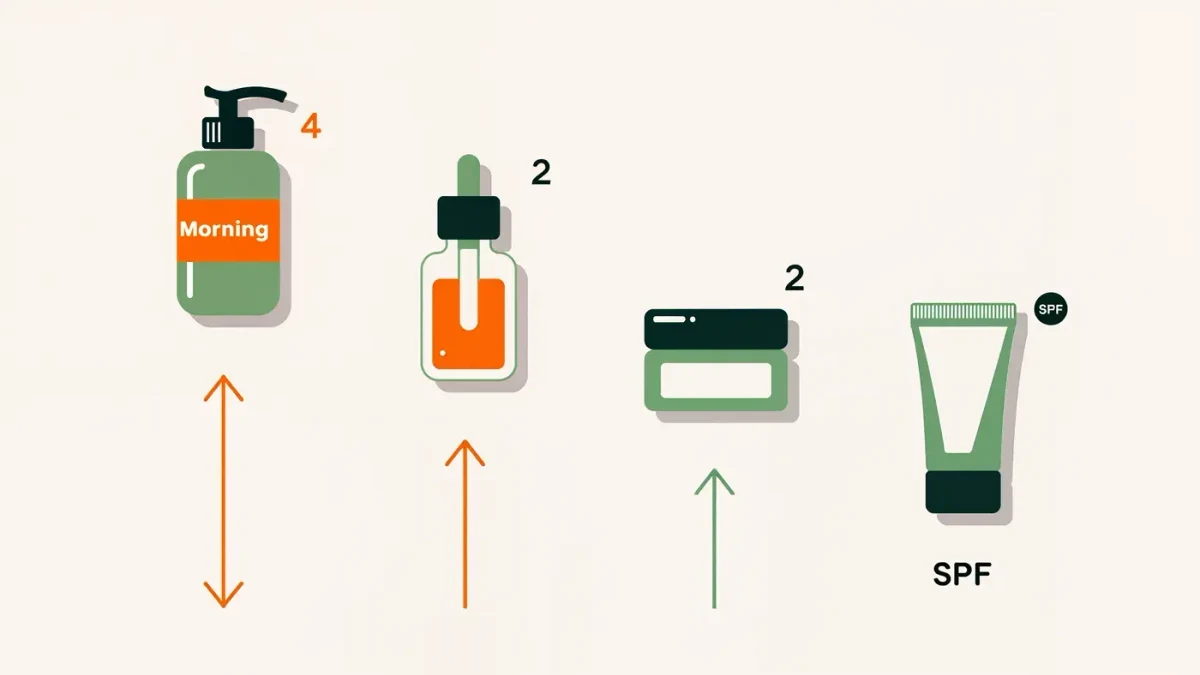
Right after cleansing, on dry skin, before heavier products. The classic morning sequence is: cleanser, vitamin C serum, moisturizer, sunscreen. If you use a hydrating essence or a hyaluronic acid serum, those can go before or after vitamin C — layering hydration around it is fine. What you want to avoid is putting a heavy silicone-rich cream on first, because it can block the lightweight serum from reaching the skin surface evenly.
One practical detail: wait about 30 seconds to a minute after applying the serum before your next layer. That is not chemistry superstition — it simply gives the water-based serum time to absorb so your moisturizer does not pill up on top of it.
How much product do you need?
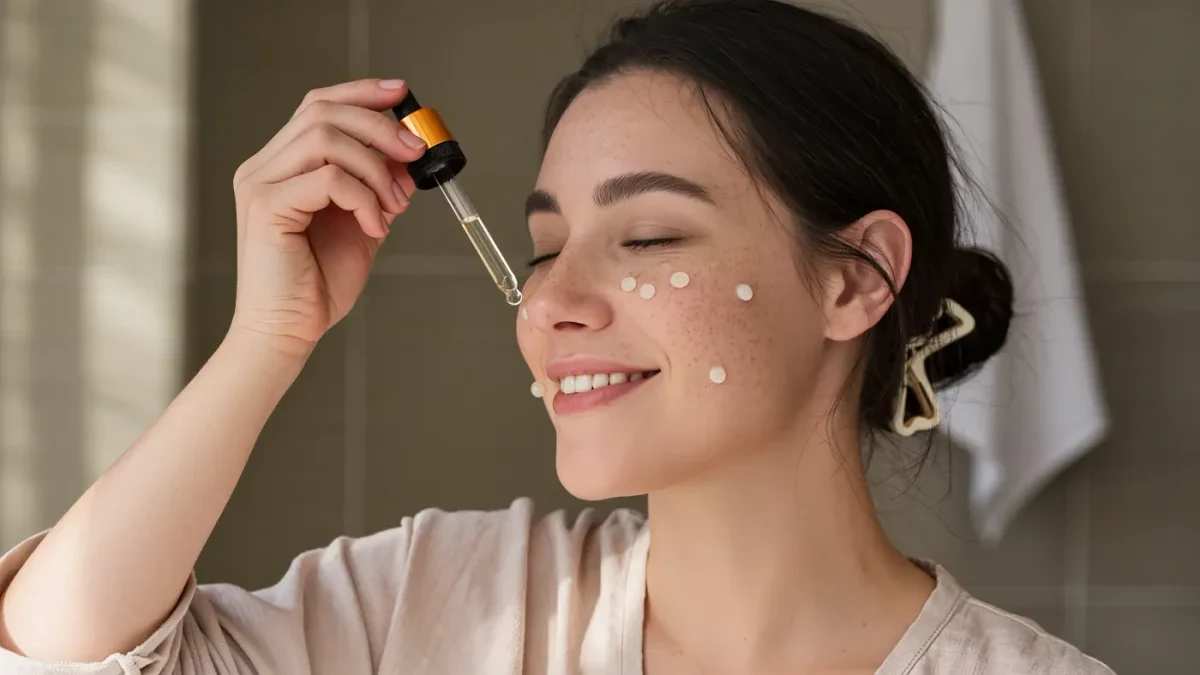
Two to three drops for the whole face. That is roughly a pea-sized amount, and it is less than most people instinctively use. Vitamin C serums are the most expensive step in many routines, and over-applying does not increase the benefit per the concentration research — the formulation matters more than the quantity. Press the drops over your cheeks, forehead, nose, and chin, then sweep whatever is left on your fingers down your neck. Skip the eye area if the product stings there; a dedicated eye cream is an easier route.
Can you use vitamin C with other morning actives?
Yes, with two sensible pairings and one caution. Vitamin C layers comfortably under sunscreen (non-negotiable pairing — the AAD consistently emphasizes that antioxidants supplement, never replace, SPF) and alongside hydrating ingredients like glycerin, panthenol, and hyaluronic acid. The caution is acids: stacking a strong exfoliating acid (glycolic, salicylic) at the same moment as a 15–20% L-ascorbic acid serum is the fastest way to get stinging, especially in winter. If you love your exfoliating toner, use it in the evening and keep vitamin C for mornings. There is no truth to the old internet claim that vitamin C and niacinamide cancel each other out — research from the 2000s showed the interaction was based on studies done at implausibly high heat, and modern formulas combine them routinely.
Why does my serum keep turning orange?
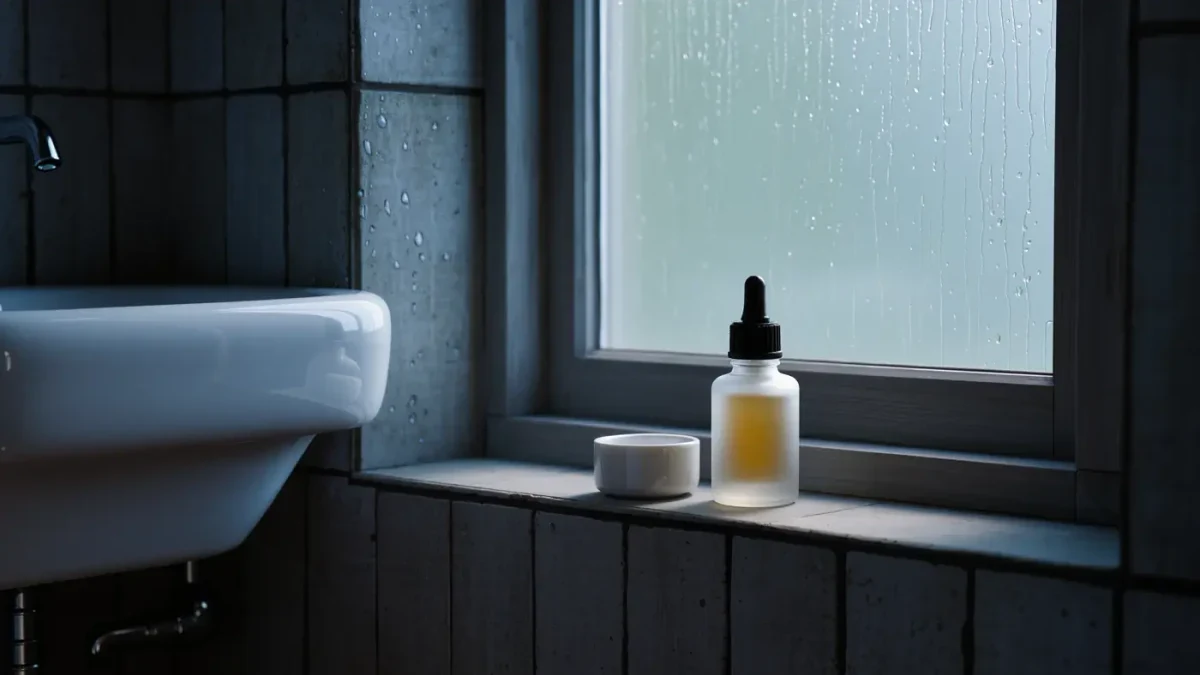
Oxidation — and it is your cue to replace it. L-ascorbic acid is notoriously unstable: it degrades when exposed to light, air, and heat, shifting from pale champagne to dark orange or brown. Once it is deeply discolored, the antioxidant capacity is largely spent, per the brand documentation of most major vitamin C serums, which recommend discarding after the color changes. To slow this down: store the bottle in a cool, dark drawer (not a sunny bathroom shelf), keep the cap tightly closed, and choose packaging that is opaque or air-restrictive — a pump or a dark glass dropper beats a clear jar every time.
If you go through serums slowly, consider a smaller bottle size, or look for stabilized derivatives like tetrahexyldecyl ascorbate or sodium ascorbyl phosphate, which last longer in the bottle even if the direct evidence for them is less extensive than for pure L-ascorbic acid.
What results should you realistically expect, and when?
Set your calendar to weeks, not days. In published trials, the common pattern is subtle glow and smoother texture around 4 weeks, more even tone and faded post-blemish marks around 8 to 12 weeks. A frequently cited 2013 clinical study on a 10% vitamin C formulation (published in the Journal of Clinical and Aesthetic Dermatology) documented measurable brightening at the 12-week point. If your skin feels comfortable and looks slightly fresher by month one, the serum is doing its quiet work. If you see zero change by three months, the issue is usually the formulation, the storage, or skipped mornings — not your skin.
A simple 5-minute morning template
- Cleanse with lukewarm water and a gentle cleanser — hot water nudges sensitivity up before actives go on.
- Pat skin until just damp-dry, then press in 2–3 drops of vitamin C serum.
- Wait 30–60 seconds while you brush your teeth or make coffee.
- Apply moisturizer suited to your skin type — gel for oily, cream for dry.
- Finish with a broad-spectrum SPF 30 or higher. Per the AAD, this step is what makes the antioxidant routine meaningful.
FAQ
Can I use vitamin C serum at night instead? Yes — consistency beats time of day. The reason dermatologists suggest mornings is that antioxidants pair logically with daytime UV and pollution exposure, but an evening application still delivers the same collagen-supporting and brightening effects. If mornings feel rushed, use it at night and do not look back.
Does vitamin C replace sunscreen? No, and any brand implying otherwise is overreaching. Per the American Academy of Dermatology, sunscreen remains the single most effective daily anti-aging and skin-cancer-prevention step. Vitamin C is a supplement to SPF — it mops up some of the free radicals sunscreen cannot block — not a substitute for it.
What percentage should a beginner choose? Start around 10% if your skin is reactive, or 15–20% if it tolerates actives well. Studies showing visible benefits mostly cluster in the 10–20% L-ascorbic acid range; formulations above that tend to add irritation without added results. Sensitive skin can also try derivatives, which trade some potency for comfort.