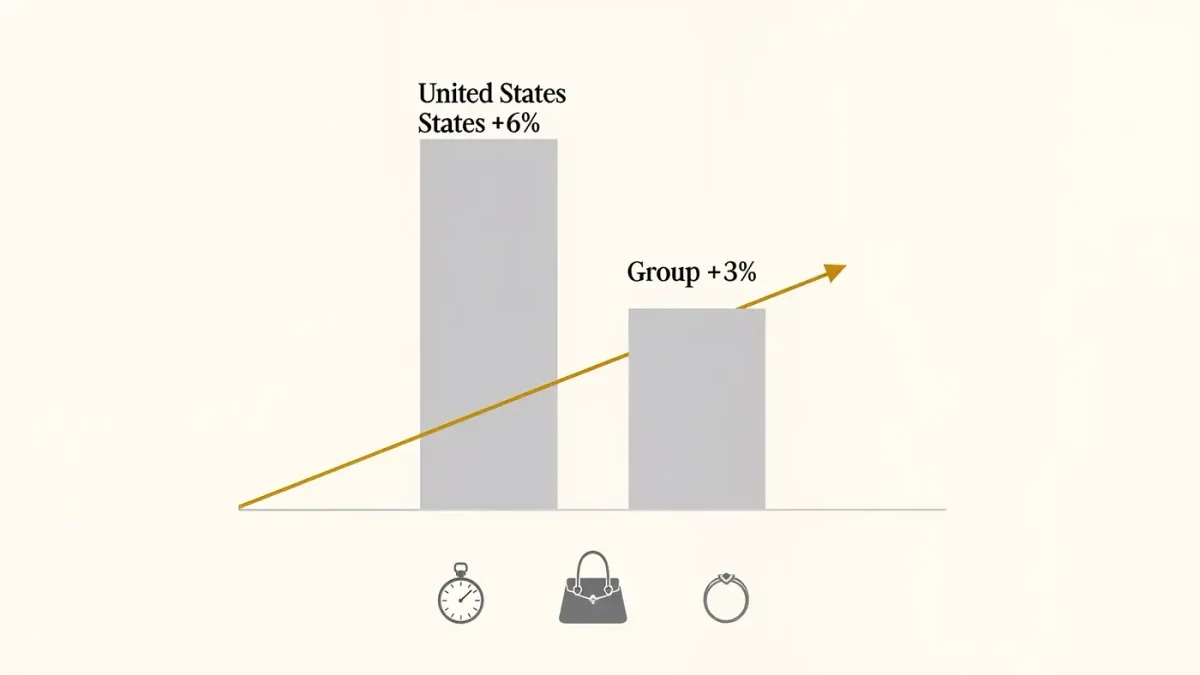
Per Reuters, on July 27, 2026, LVMH reported second-quarter sales up 3%, with US revenue rising 6% as strong American demand offset the hit from the Iran war's disruption of Middle East tourism and airport retail. Reuters' follow-up the next day was blunt: the world's biggest luxury group 'failed to reassure on luxury recovery', and shares fell as the quality of the growth came under question.
Is 3% growth a recovery or a cushion?
Both, depending on where you stand. The good news, per the group's results: fashion and leather goods — the Louis Vuitton and Dior division that produces most of LVMH's profit — returned to growth after a difficult stretch, and jewelry performed strongly, with sector jewelry sales up 24% in the quarter to June 30 per Reuters' sector analysis. The caveat is geography. Strip out the United States and the picture is flat-to-negative: European tourist traffic is thinner without Middle Eastern travelers, China's rebound is modest, and the American shopper who kept spending through 2025 cannot carry the whole industry forever.
For anyone tracking prices, note what a US-led recovery encourages: brands keep their strongest pricing power where demand is hottest. Per the results coverage, that means American boutiques have the least incentive to discount and the fullest shelves of the most-wanted pieces — a reversal of the usual assumption that New York pays the most for the privilege.
What it changes for your wardrobe and budget
If you buy luxury in the US, the practical move is inverse: the deals live where demand is soft. Asian and European retail, hungry for tourist traffic, is running more aggressive end-of-season promotions and tax-refund advantages on the same designer goods — per Reuters' reporting on the regional split, that gap widened this quarter. If you are traveling, buy there; if you are not, transatlantic personal-shopper services and duty-free allowances can still capture part of the spread on big-ticket items.
The detail most coverage skipped: the jewelry signal. A 24% quarterly jump in jewelry sales, per Reuters' sector piece, is not just Richemont's story — it explains why LVMH keeps investing in Tiffany and its own jewelry maisons even while fashion stalls. For shoppers, fine jewelry is the category where both new and resale demand is running hottest, so it is currently the worst category to expect a discount in and the strongest holder of value if you are buying gold anyway.