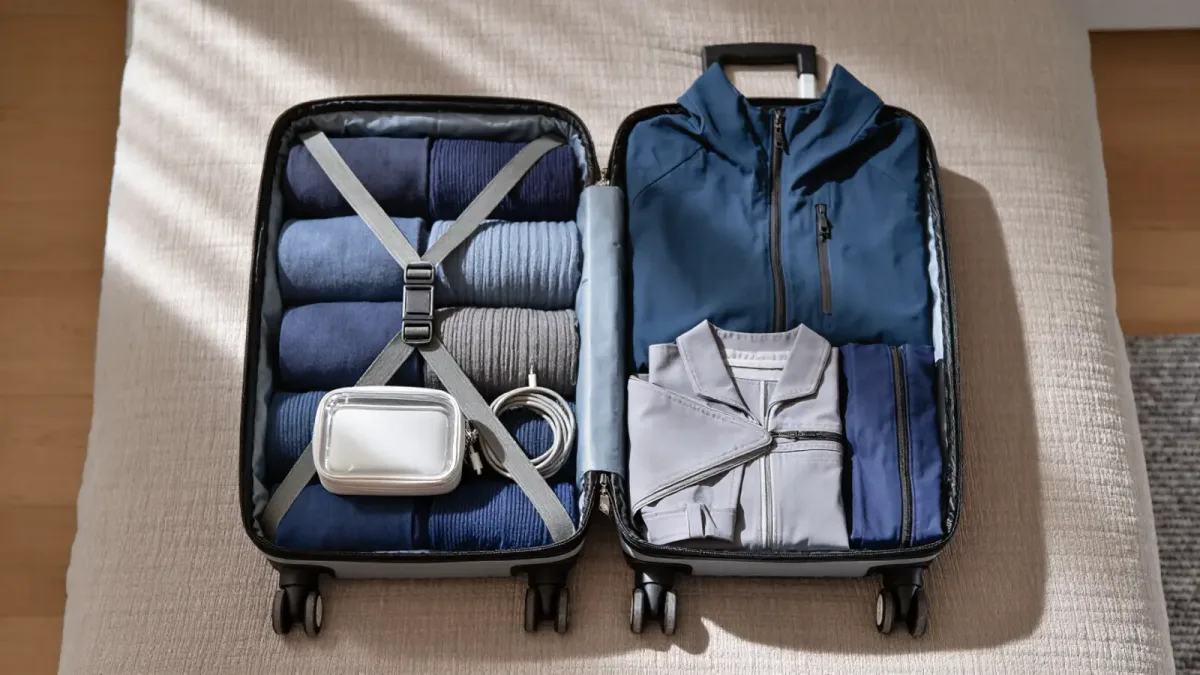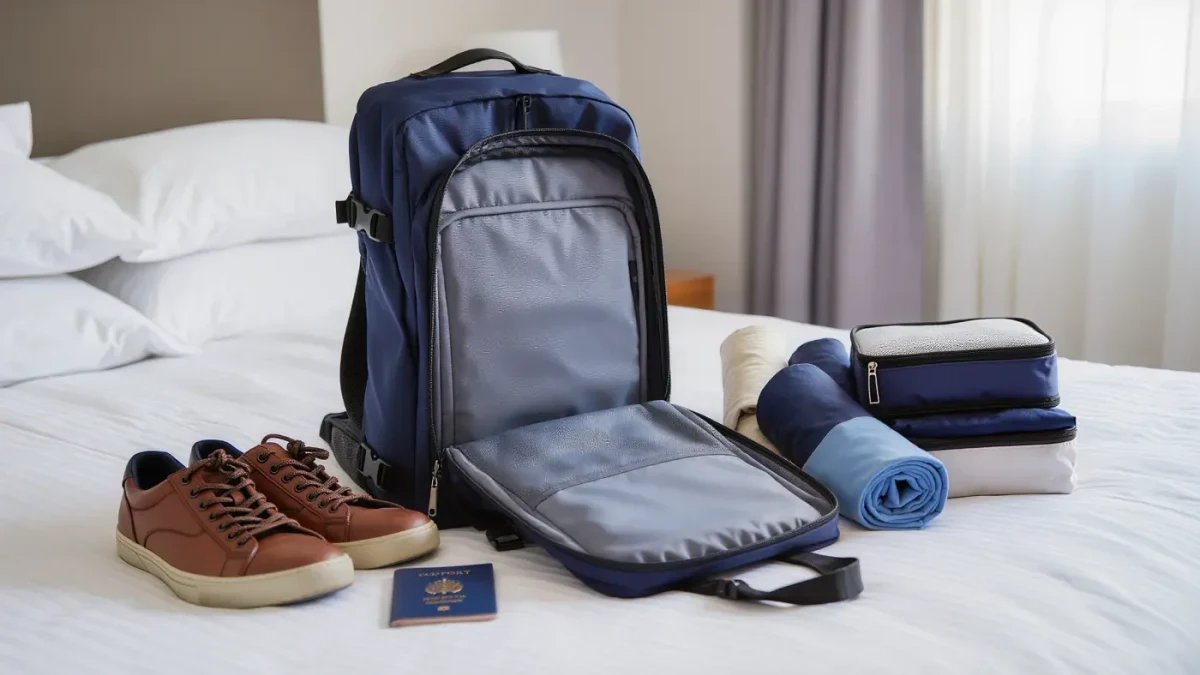
A week fits in one carry-on if you pack for about four days and wash once: four tops, two bottoms, one warm layer, one dressier layer, and every item in a single compatible palette. That's roughly 12–15 garments in a 30–40 liter bag, meeting the standard carry-on limit of 22 x 14 x 9 inches used by major U.S. airlines as of 2026.
What actually goes in the bag?
The core list, dressed for a mild-climate city week: four tops in the same palette (two tees, one button-down, one fine knit), two bottoms (dark jeans or chinos plus something lighter), one merino or fleece midlayer, one packable jacket, one slightly dressier option for a nice dinner, underwear and socks for four days, sleepwear, and two pairs of shoes — the comfortable pair worn in transit, one compact alternative packed. Everything must mix with everything; if a top only works with one bottom, it doesn't come.
Toiletries shrink to a one-quart bag: decanted shampoo, cleanser, sunscreen, one hair product, a razor, medications. Solid toiletries — bars of shampoo and soap — skip the liquid rules entirely and never leak. The wardrobe math most first-timers miss: outfits come from combinations, not items. Four tops times two bottoms plus layers is eleven-plus distinct looks. You will not run out of clothes; you will run out of the habit of choosing from a bigger pile. lifestyle coverage.
Roll or fold?
Both, by category. Roll soft cotton items — tees, sleepwear, gym clothes — into tight cylinders; they compress well and hide in gaps around shoes. Fold along seams and stack flat: structured items like button-downs, trousers, and anything that creases visibly. Folded-in-tissue is a boutique fantasy for real travel; folded-in-plastic (a dry-cleaning bag or reusable folder) genuinely reduces friction creases for button-downs.
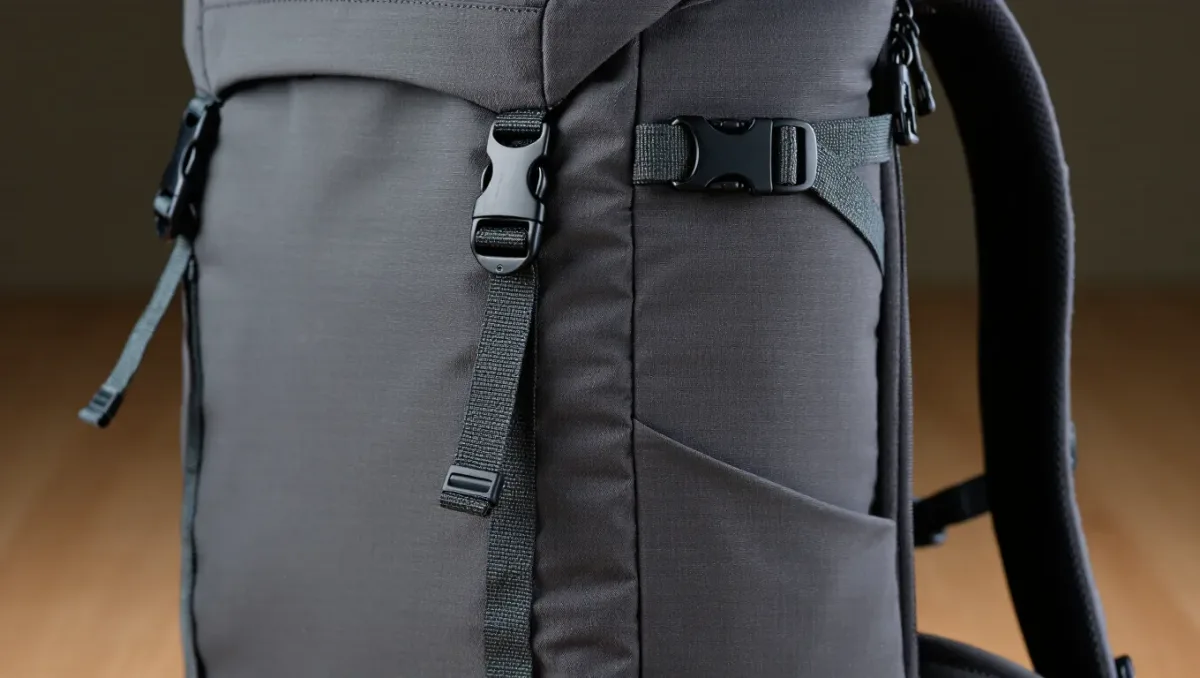
The packing-cube question is a personal religion, but the practical answer: one large cube for clothes, one small for underwear and socks, one slim for cables and toiletries keeps the bag operable mid-trip. Compression cubes squeeze out another 15–20 percent but tempt you to overpack — the discipline matters more than the gear. A serviceable 35–40L carry-on backpack or roller runs $80–250 as of early 2026, and an $80 bag you've packed well beats a $400 bag packed badly every single trip.
The shoes and laundry decisions
Shoes are the space villains: two pairs maximum, and the packed pair should be your flattest, stuffed with socks at the toe. Wear the bulkiest pair on the plane. Laundry is what makes one bag work for seven days — a five-minute sink wash with a dab of solid detergent or a $3 packet of travel detergent sheets, hung overnight, resets your two rotation tops. Most quick-dry merino and synthetic travel fabrics are dry by morning; heavyweight cotton denim is not, which is why denim travels as a single, hardworking pair.
If a sink wash sounds grim, plan the trip around one laundromat evening or a hotel laundry drop on day four — either is cheaper than a checked bag, which major U.S. airlines priced around $35–45 for the first bag as of early 2026 (prices are subject to change). One bag also means you never wait at baggage claim, never lose a bag, and can move through a train station like a person rather than a pack animal.
What about the personal item?
It's your flex space, and it's doing real work: under-seat dimensions on major U.S. carriers commonly run around 18 x 14 x 8 inches as of 2026. Pack it with the stuff you need in transit — laptop, book, headphones, snacks, an empty water bottle, and the layer you'll want when the cabin gets cold — plus, on the return, the overflow you acquired. A soft tote or slim daypack that folds flat into the carry-on when you board is the standard trick.
Two rules keep the personal item honest. First, no second "just in case" wardrobe lives in it; if it's clothing that isn't worn in transit, it belongs in the main bag's count. Second, valuables and medications go here, always — one bag is low-risk, but the under-seat bag stays physically with you for the entire trip.
How do you keep the palette working all week?
Choose two neutrals and one accent before you buy anything into the bag — navy, cream, and rust, say, or black, grey, and olive. Photograph the packed clothes laid on a bed before zipping: if the photo looks like one person's wardrobe, you've done it; if it looks like a sample sale, cut something. A single small scarf or cap does more for outfit variety than a third pair of shoes ever will, and it weighs an ounce.
Finally, calibrate to the trip, not the fantasy. A city week needs the dinner option and comfortable walking shoes; a beach week swaps jeans for two pairs of shorts and ditches the knitwear. The list above is the frame — adjust items, keep the count. After one successful one-bag week, most travelers never go back: the unpack takes ninety seconds, and nothing has ever been lost in a hotel room it wasn't sitting in plain sight.
FAQ
What size bag counts as one carry-on?
The common U.S. limit is 22 x 14 x 9 inches including wheels and handles, with many European carriers stricter — check your specific airline before buying. A 30–40 liter bag almost always complies; anything over 45L usually doesn't.
How do I handle a formal event with one bag?
One dressy layer and dark bottoms cover most restaurant- and event-level dress codes; the dark chinos you packed double as evening wear. If the trip centers on a genuinely formal event, that's the rare case where a garment bag earns its place — otherwise, a dark knit over dark trousers passes nearly everywhere.
Is merino really worth the price?
For one-bag travel, yes — merino resists odor for multiple wears and dries overnight after a sink wash. Entry-level merino tees run about $40–80 as of early 2026 (prices are subject to change). If that's steep, quick-dry synthetic tees achieve similar function at half the price, just with more frequent washing.